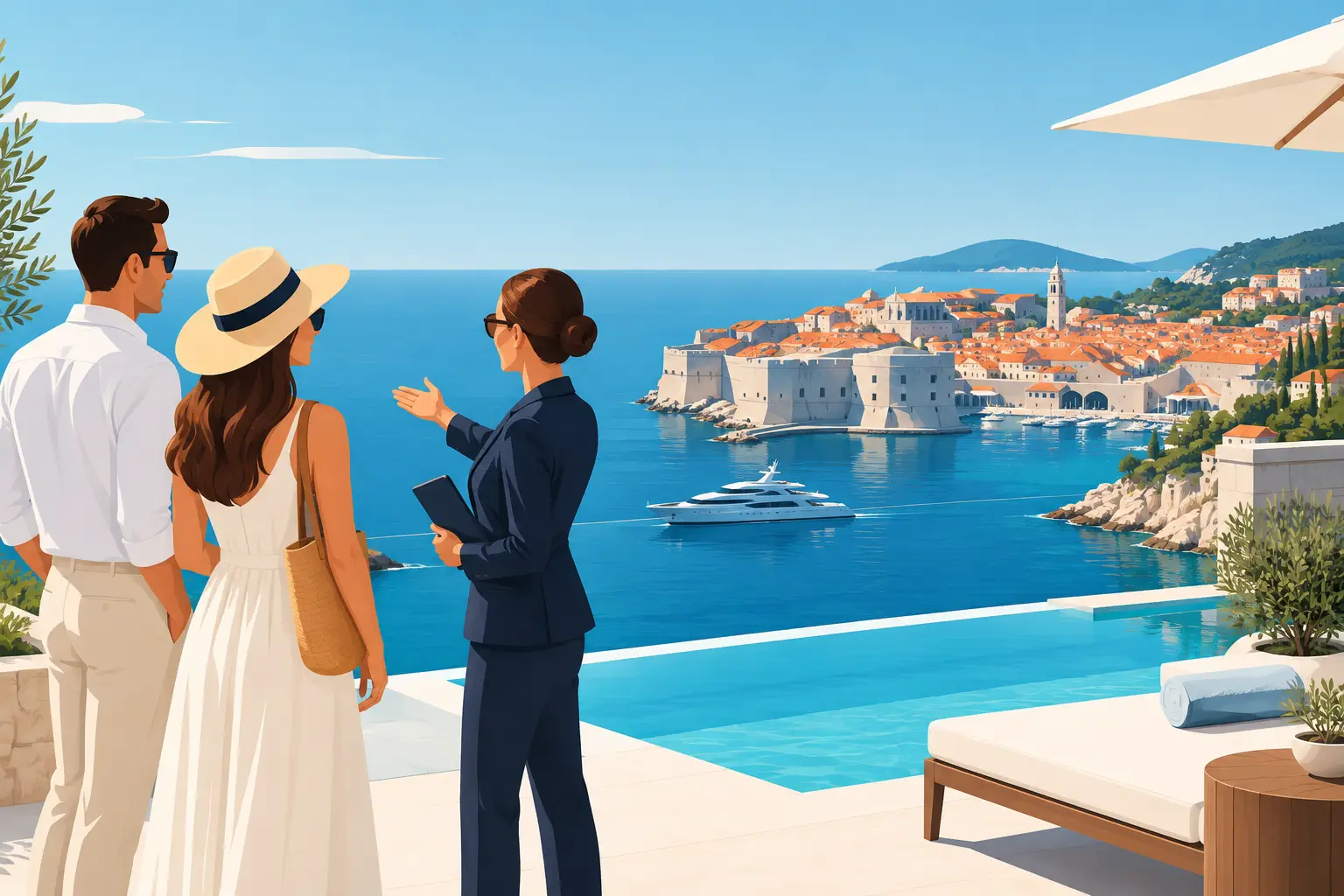
Croatia can look wonderfully simple on a map: a ribbon of Adriatic coast, more than a thousand islands, and historic cities connected by short distances. Yet the reality behind an exceptional holiday is more intricate. To book a Croatia DMC is to place the details in the hands of people who know which harbour feels right at sunset, when a private transfer needs to leave to avoid summer traffic, and which family-run konoba merits a table reservation weeks ahead.
For luxury travel designers, tour operators and discerning private travellers, this local knowledge turns a promising itinerary into an experience with rhythm, personality and genuine confidence. It is not merely about booking hotels and transport. It is about making every arrival, encounter and change of scene feel considered.
Why book a Croatia DMC rather than assemble the trip remotely?
Croatia rewards curiosity, but it does not always reward assumptions. The country’s highlights are varied: Dubrovnik’s stone walls and cinematic coastline, Split’s living Roman palace, Hvar’s polished harbour, Istria’s vineyards and truffle country, Plitvice’s waterfalls, and the quieter islands of the Kvarner Gulf. Each has its own seasonality, access points, supplier patterns and pace.
A specialist DMC brings these moving parts together. That matters when a couple wants a yacht day from Split with a discreet lunch on a lesser-known island, when a family needs the right combination of spacious rooms and engaging guides, or when a small incentive group requires polished logistics across several cities. A local team can match the idea to what is genuinely possible on the ground, rather than relying on a generic route or an attractive but impractical schedule.
There is also a considerable difference between availability and suitability. A hotel may have rooms, but are they the rooms with the terraces, views or interconnecting arrangements that the guests expect? A boat may be free, but is it the right vessel for a relaxed multi-generational day at sea? A Croatia DMC assesses those distinctions before they become disappointments.
For trade partners, the value is equally practical. One experienced operational partner can coordinate contracting, confirmations, reconfirmations, special requests, supplier communication and in-resort support. That creates accountability throughout the journey, especially valuable when clients are travelling at peak periods or combining Croatia with Slovenia, Montenegro, Bosnia and Herzegovina, Serbia, North Macedonia or Albania.
The difference is felt in the itinerary, not just the paperwork
A well-designed Croatian holiday has contrast. Begin with the early morning calm of Dubrovnik before the city fills, continue to a private tasting in the Pelješac Peninsula, then spend a few unhurried nights on an island where the days follow the sea rather than a fixed timetable. The best programmes make room for the moments travellers do not yet know to request.
That might be a local guide who makes Diocletian’s Palace intelligible and entertaining for teenagers, a winemaker sharing a long lunch among the vines, or a skipper selecting a sheltered cove according to the wind. These are not interchangeable add-ons. They depend on trusted relationships and experienced judgement.
A DMC also helps preserve the right balance between discovery and downtime. Clients may say they want to see everything, particularly on a first visit. However, moving through too many islands or changing hotel every night can leave even the most beautiful route feeling rushed. An expert will advise where to stay longer, which transfers merit a private vehicle, and when a scheduled ferry is perfectly appropriate.
Luxury is often interpreted as adding more. In Croatia, it can just as easily mean removing friction: luggage handled carefully, a driver waiting after a delayed flight, a restaurant chosen for its cooking rather than its view alone, and enough free time to enjoy a hotel terrace overlooking the Adriatic.
Private journeys, groups and events need different thinking
The same destination requires different planning disciplines depending on the brief. A honeymoon can centre on privacy, exceptional dining and a handful of memorable gestures. A group of friends may favour active days, sociable dining and a villa or yacht. For a corporate programme, timing, guest flow, branded moments, contingency planning and clear on-site leadership become central.
This is where a full-service DMC earns its place. The work happens well before arrival: checking flight schedules, mapping transfer times accurately, aligning guides and vehicles, arranging dietary requirements, reviewing cancellation conditions and preparing alternatives if weather affects boating or outdoor plans. Guests should experience the magic, not the operational effort behind it.
What a Croatia DMC should manage
A credible local partner should be able to look beyond individual reservations and take responsibility for the entire programme. This includes accommodation sourcing, private transport, guides, experiences, restaurant reservations, yacht and boat arrangements, and carefully timed intercity or cross-border logistics.
Support is just as significant as planning. Adriatic weather can change, ferries may alter schedules, and an unexpected flight delay can affect an otherwise carefully timed arrival. Round-the-clock emergency assistance is not a luxury extra when guests are travelling through several locations. It is an essential layer of reassurance for both the traveller and the agency that entrusted their clients to the destination.
Ask how the DMC vets suppliers, who is available outside office hours, and how it handles changes while guests are travelling. Also ask whether the team can work comfortably with your preferred style of communication, documentation and billing. For travel professionals, responsiveness and clear financial processes are every bit as important as creative ideas.
Perfecta Travel combines destination specialists, multilingual consultants and a network of trusted regional suppliers to create hand-picked programmes across Croatia and the Balkans. With local operational oversight, the objective is not simply a beautiful plan on paper, but service that remains attentive from the first arrival to the final departure.
When to book a Croatia DMC
For July and August, early planning is strongly advised. The most desirable coastal hotels, villas, private yachts and experienced guides are limited, particularly in Dubrovnik, Split, Hvar and the most sought-after parts of Istria. Booking early provides more than availability: it gives the itinerary space to be shaped around the client rather than around the remaining inventory.
Shoulder season can be outstanding for travellers who prefer a gentler atmosphere. May, June, September and early October often offer warm days, excellent food, rewarding sightseeing and easier access to sought-after tables and experiences. It depends, however, on the intended route. Some island properties and restaurants operate with reduced hours at the edges of the season, while sailing conditions and sea temperatures vary.
For events and incentive travel, lead time is even more important. Venue capacity, gala locations, group restaurants, permits, coaches and luggage logistics all need to work as one. A local DMC can advise whether a headline destination suits the group size and objectives, or whether an alternative region will deliver greater character and better value.
Questions worth asking before you appoint a partner
Start with their destination depth. Can they explain the practical differences between a stay in Hvar Town, Vis, Korčula and Brač? Do they have meaningful options beyond the obvious coastal circuit? The strongest answers usually contain honest guidance, including where a client’s initial idea may need adjustment.
Then consider scale and service. A partner should be equipped to manage both intricate private trips and larger programmes without making either feel formulaic. Seek evidence of established local relationships, appropriate insurance and safety processes, experienced operational staff and a clear route for escalation when plans change.
Finally, look for curiosity. Croatia is not one fixed product, and neither are its visitors. The right DMC listens for the details behind a request: the traveller who loves architecture but dislikes crowds, the family seeking gentle adventure, the food-focused couple who would happily travel inland for an exceptional meal. Those insights are what make an itinerary feel personal rather than merely premium.
The most memorable Croatian holidays leave guests with more than photographs of blue water and ancient stone. They remember feeling welcomed, understood and free to enjoy each moment. Choose a local partner with the knowledge to protect that feeling, and Croatia has a remarkable way of becoming a place travellers want to return to.