×

Croatian Island Hopping, Beautifully Planned

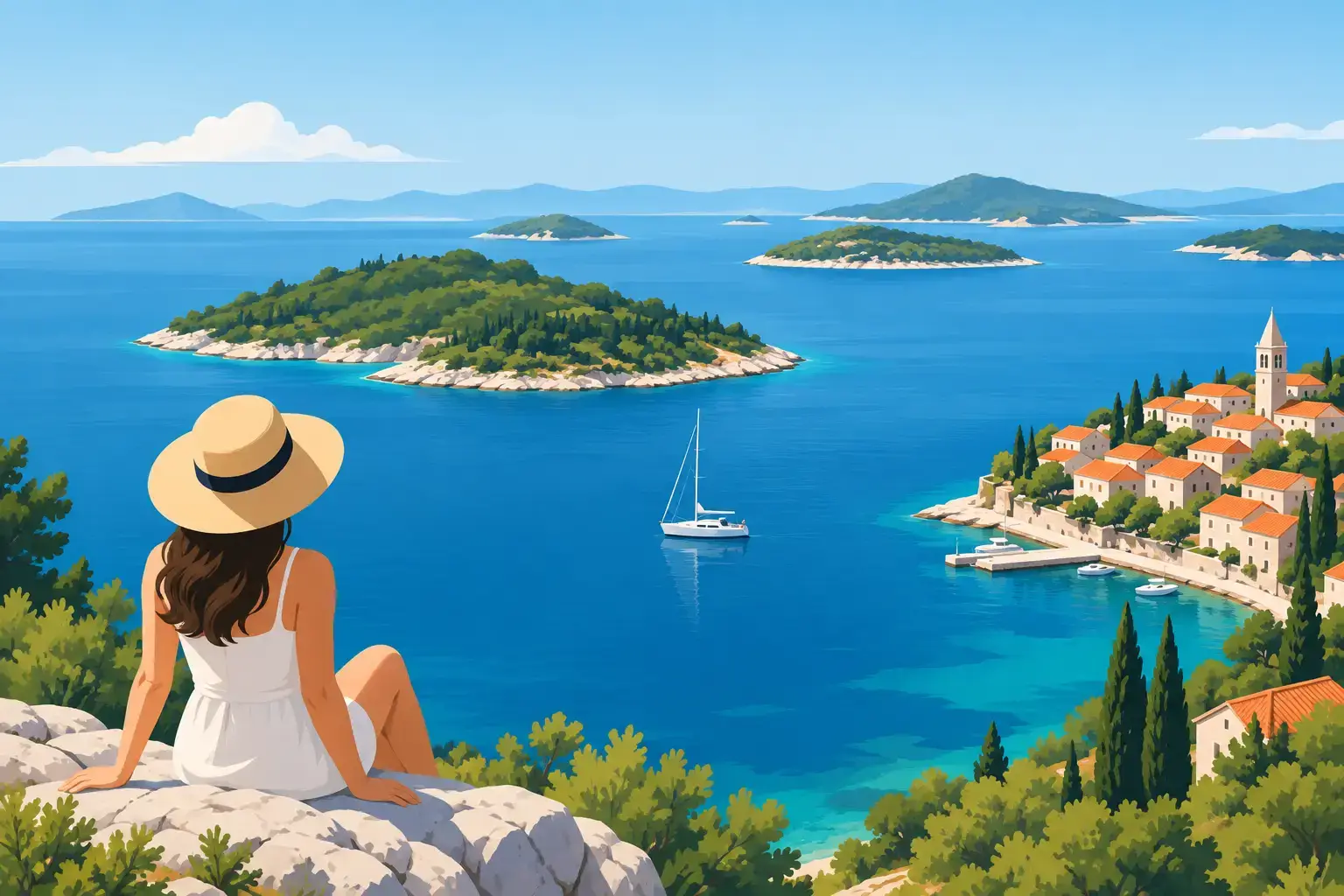
The first glimpse of Hvar Town from the water is reason enough to choose Croatian island hopping: Venetian stone façades rise above a glittering harbour, pine-covered slopes frame the bay, and lunch can begin within minutes of stepping ashore. Yet the real pleasure lies in moving beyond the famous view, following a route that reveals the Adriatic at its most varied – quiet coves, family wineries, walled medieval towns and islands where the rhythm remains delightfully unhurried.

Croatia has more than a thousand islands, islets and reefs, but a memorable holiday is not made by trying to see as many as possible. It comes from choosing the right sequence, allowing time to settle into each place, and making every crossing feel like part of the experience rather than a logistical interruption. For luxury travellers, families and small private groups, thoughtful planning turns an island journey into something genuinely personal.

Why Croatian island hopping needs careful design

The Dalmatian coast is wonderfully navigable, but the islands are not interchangeable. Hvar brings energy, historic grandeur and superb restaurants. Vis is more remote, with a gentler pace and compelling wartime history. Korčula combines a handsome old town with vineyards, olive groves and tranquil villages. Mljet offers forested calm and a national park shaped around saltwater lakes.

Their individual character is precisely why a route should be shaped around the traveller, not simply around ferry timetables. A couple seeking refined hotels, exceptional dining and time at sea may choose Hvar, Vis and Korčula. A multigenerational family may prefer shorter crossings, spacious villa accommodation and islands with sheltered swimming bays. Guests who are passionate about food and wine can linger in the Pelješac peninsula before continuing to Korčula, where the local Grk and Pošip wines reward a slower stay.

There is also a practical consideration. Public catamarans are efficient for straightforward point-to-point travel, especially in high summer, but their schedules can limit spontaneity and luggage arrangements. Private speedboats, luxury yachts and skippered day charters bring flexibility, allowing guests to pause for a swim in a secluded cove or arrive at a restaurant by water. The best choice depends on the season, the group’s priorities and whether the journey itself is intended to be a defining part of the holiday.

The most rewarding Croatian island hopping routes

Split, Hvar, Korčula, Mljet and Dubrovnik

This is the classic southern Dalmatian route, and it earns its reputation. Begin in Split, where Roman layers, lively markets and the dramatic setting of Diocletian’s Palace offer an atmospheric introduction before the coast opens out. From there, Hvar provides a glamorous first island stay, with elegant waterfront hotels, historic lanes and a remarkable view from the Spanish Fortress.

Rather than rushing onwards after one night, two or three nights in Hvar create room for its quieter side. A private boat can reach the Pakleni Islands for crystalline swimming and a relaxed lunch, while inland villages offer lavender fields, family-run konobas and vineyard scenery far removed from the harbour’s evening buzz.

Korčula follows beautifully, particularly for guests who prefer heritage and gastronomy over a late-night scene. Its fortified old town is compact, captivating and ideal for an evening stroll after a private tasting of local wines. Beyond the walls, Lumbarda’s sandy beaches and vineyards introduce a softer, more rural island landscape.

Mljet is best appreciated as a pause rather than a checklist stop. The national park’s lakes, woodland paths and Benedictine island create a restorative contrast to the busier ports. Continue to Dubrovnik for a final chapter of limestone streets, exceptional hotels and a sunset cruise beneath the city walls. Allow at least eight to ten nights for this route if the aim is to travel in comfort rather than merely cover distance.

Split, Brač, Hvar and Vis

For a shorter journey with a more relaxed, sea-focused character, this central Dalmatian itinerary is an excellent choice. Brač sits close to Split but feels distinctly removed from the mainland. Its white limestone has shaped landmarks around the world, while its inland villages, olive oil traditions and beaches give it considerable depth.

Hvar adds contrast, and Vis completes the route with a sense of escape. For decades, Vis was closed to foreign visitors due to its military importance, which helped preserve an authenticity that is increasingly rare on the Mediterranean. Komiža, on the western side of the island, remains a particularly enchanting base for guests drawn to fishing heritage, simple seafood and dramatic open-sea views.

The Blue Cave on nearby Biševo is often requested and can be striking in the right conditions. It is worth setting expectations carefully, however: access is weather-dependent and the experience can be busy in peak season. An early private departure, paired with lesser-known coves and a long lunch on Vis, is usually more rewarding than making the cave the sole purpose of the day.

What transforms an island itinerary into an exceptional holiday

The finest island programmes leave room for discovery while ensuring every essential detail has been anticipated. A private driver at the mainland airport, a knowledgeable skipper who understands local conditions, port assistance with luggage and restaurant reservations made well ahead of summer all make a material difference.

Accommodation should also follow the mood of each island. A heritage hotel within Korčula’s old town offers a very different experience from a contemporary waterfront retreat on Hvar or a private villa on Brač. Neither is inherently better. The right decision rests on whether guests value being able to walk to dinner, want complete privacy, or need generous space for children and extended family.

Food provides some of the most enduring island memories. Think just-caught fish grilled over olive wood, octopus prepared under a peka bell, sheep’s cheese from Pag, hand-harvested oysters from nearby Ston and wines poured by the people who make them. Private tastings and market-led cooking experiences bring valuable context, particularly for travellers who want to meet the local families behind Croatia’s distinctive culinary traditions.

Timing, weather and the luxury of pacing

May, June, September and early October are often the most appealing months for Croatian island hopping. The sea is inviting, restaurants and hotels are fully open, and the pace is generally more relaxed than in July and August. Spring offers green landscapes and excellent walking conditions, while September brings warm water and a harvest-season focus in many wine regions.

High summer has its advantages: long, luminous evenings, dependable warmth and a lively coastal atmosphere. It also requires early planning. Premium rooms, quality skippers, sought-after restaurant tables and the most attractive berths can be in high demand. For groups travelling at this time, private arrangements offer valuable control over timing and comfort.

Weather always deserves respect. The Adriatic is often calm, but winds such as the bura and jugo can affect sea conditions and scheduled crossings. A well-managed itinerary includes sensible alternatives: a private inland tasting, a guided old-town walk, a spa afternoon or an additional night in a well-chosen hotel. Flexibility is not a compromise when it is built into the programme from the start.

Local expertise behind every crossing

A polished island holiday appears effortless because the detail has been handled quietly in the background. This is where an experienced Croatia-based team is invaluable: matching vessels to the group, selecting dependable local partners, monitoring conditions, coordinating transfers and remaining available if plans need to change.

Perfecta Travel designs hand-picked island programmes that can begin with a private arrival in Split or Dubrovnik and extend across Croatia’s coast, islands and neighbouring Balkan destinations. With multilingual local support and 24-hour assistance, each journey can balance celebrated highlights with the small, unexpected moments that make a place feel truly known.

The Adriatic rewards travellers who resist the urge to hurry. Choose fewer islands, stay a little longer, and leave enough room for the unscheduled swim, the harbour-side aperitif and the conversation that lasts well beyond dinner.
Croatia Villas Versus Hotels: Which Stay Suits You?

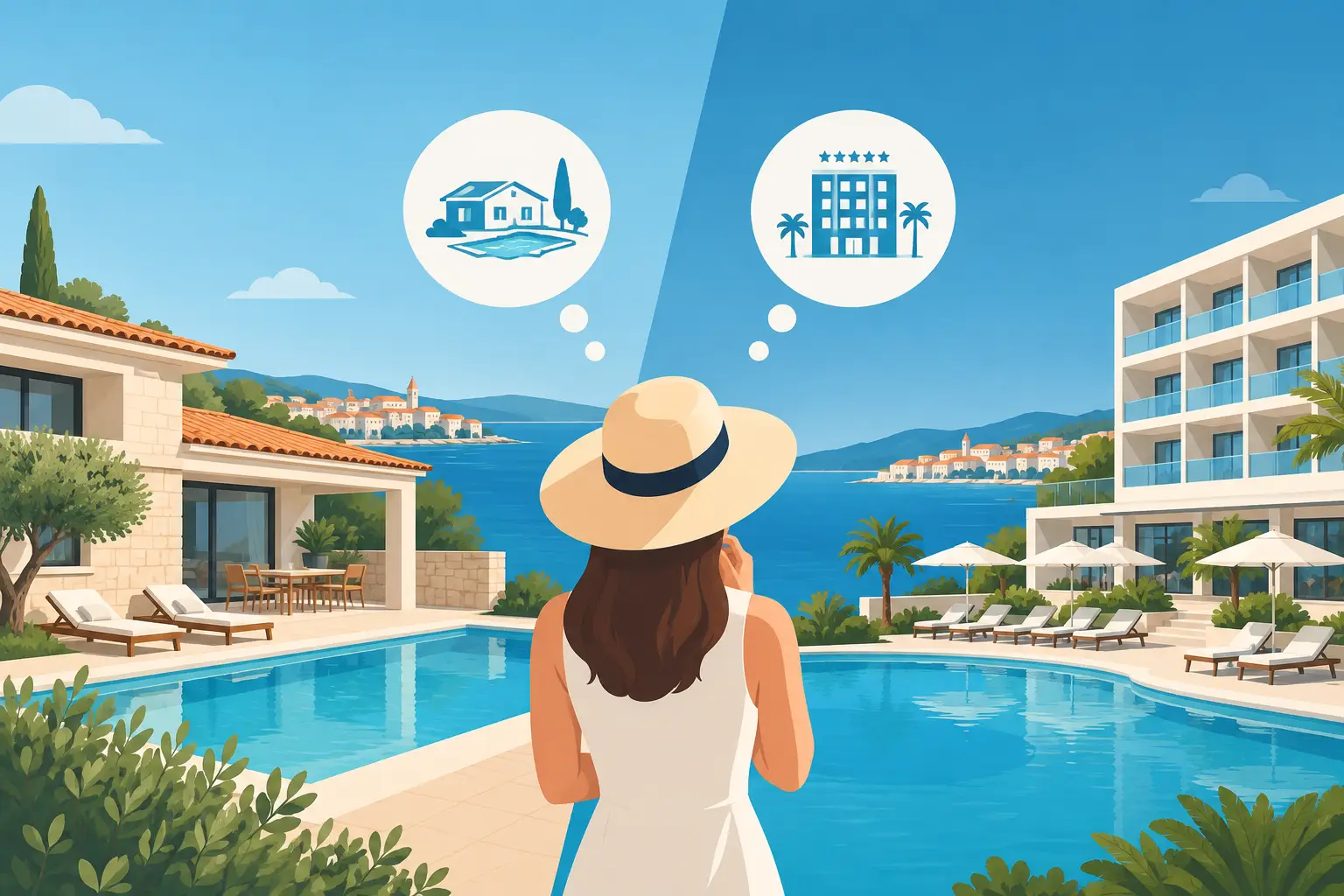
A terrace above the Adriatic, breakfast prepared in your own kitchen, a boat waiting below the villa – or a suite where the concierge can arrange every detail before you finish your coffee? The choice between Croatia villas versus hotels shapes far more than where guests sleep. It influences the pace of the holiday, the kind of service available and how naturally a journey can move from Dubrovnik’s old city to the quieter islands of Dalmatia.

For luxury travellers, there is no universal winner. Croatia’s finest villas and hotels serve different styles of escape exceptionally well. The right decision comes down to party size, desired privacy, appetite for independence and the complexity of the wider itinerary.

Croatia villas versus hotels: begin with the holiday rhythm

A villa creates a private world. It is often the better choice for guests who want long, unhurried mornings, space for children to play, and the freedom to decide whether dinner is a private chef’s menu, grilled fish by the pool or a reservation in a village konoba. On Hvar, Brač, Vis and the Dubrovnik Riviera, a well-positioned villa can feel like a personal retreat, particularly when paired with a private skipper and a carefully timed restaurant programme.

A hotel brings an appealing sense of occasion and ease. Guests can step into a beautiful lobby, settle into a sea-view suite and have spa treatments, beach service, dining and local recommendations immediately at hand. This is especially valuable for short stays, first-time visitors to Croatia, or travellers who prefer their holiday to be supported by an experienced on-site team.

Neither option is inherently more luxurious. A striking heritage hotel in Split can place guests within moments of Diocletian’s Palace, while a contemporary villa on a secluded island may offer space and calm that no central hotel can match. Luxury lies in how well the stay fits the guests and their plans.

The villa advantage: privacy with personality

Villas work particularly well for families, friendship groups and multi-generational parties. Rather than gathering in a hotel lounge or meeting at set times, everyone has a shared base with room to retreat. Separate bedrooms, outdoor living areas and private pools make the experience more relaxed, while shared meals become part of the holiday rather than a logistical exercise.

They also allow a more personal expression of place. A stone house amid olive groves on Korčula, a waterfront property near Primošten or a design-led hideaway outside Rovinj each creates a different atmosphere. Guests can shop at local markets, invite a chef to cook regional specialities and enjoy a slower connection with the destination.

That freedom does require considered planning. Villas vary greatly in access, staffing, beach proximity and local amenities. A hillside property may deliver extraordinary views but involve steep approaches. An island villa may be ideal for stillness, yet require early ferry or private-boat arrangements. The most rewarding choices are made with honest advice about how guests want to spend their days.

The hotel advantage: service at the centre

Hotels are often the stronger option when service and location take priority. A five-star property can provide daily housekeeping, a reception team, restaurants, wellness facilities and immediate assistance without guests having to arrange separate suppliers. For couples celebrating a milestone, this can make the holiday feel beautifully effortless.

Hotels also suit itineraries built around culture and movement. Two nights in Zagreb, three in Split and a final stay in Dubrovnik can be handled elegantly through carefully selected city or coastal hotels, especially when private transfers and expert guides are arranged around each stop. There is less time spent settling into a property and more time available for galleries, wine tastings, historic walks and coastal cruising.

For travel designers and concierge teams, hotels can provide helpful consistency. Room categories, facilities and service standards are easier to compare, while established properties are usually well equipped for special celebrations, accessible needs and short-notice adjustments. Yet the best hotel choice still demands local knowledge. A celebrated address is not always the right one for a guest seeking quiet, direct sea access or the character of an old town.

Service is not limited to a hotel reception

One common assumption is that villa holidays sacrifice service. In reality, a professionally managed villa can be supported by private airport transfers, daily or scheduled housekeeping, a villa host, chef service, grocery provisioning, massage treatments, restaurant reservations and yacht charters. The experience can be highly attentive, but it is tailored rather than visible at every turn.

This distinction matters. Some guests relish the discretion of service that arrives precisely when requested. Others enjoy walking downstairs to a breakfast buffet, speaking to the concierge face to face and returning from a swim to a ready-made cocktail. The question is not whether service exists, but how guests prefer to receive it.

A strong itinerary can blend both approaches. Guests might begin with two nights in a full-service Dubrovnik hotel, then take a private transfer and boat to a villa on Šipan or Lopud for a slower week. The contrast creates a more complete Croatian experience: city energy first, island privacy afterwards.

Location can change the whole experience

Croatia’s coast is wonderfully varied, and accommodation should respond to the geography. In Dubrovnik, a hotel near the historic centre may be ideal for travellers who want to explore early and late, before and after the busiest hours. A villa beyond the city can offer precious calm, but guests should be comfortable with transfer times and the different character of the surrounding area.

On islands such as Hvar and Korčula, location becomes even more significant. A property close to a harbour suits guests who want restaurants, cafés and evening life within walking distance. A more remote villa offers tranquillity and often better outdoor space, but usually calls for a car, skipper or pre-arranged transport.

In Istria, the choice may be between a refined hotel near Rovinj’s atmospheric old town and an inland estate surrounded by vineyards, truffle country and medieval hill villages. Both are compelling, but they tell very different stories. A carefully designed programme should make those differences clear before booking.

Value is about the whole group, not only the nightly rate

Hotels can appear more straightforward because the rate is priced per room, often with breakfast and selected facilities included. Villas may look more expensive at first glance, but for a group of six, eight or more travellers, the cost per person can be highly attractive. A shared villa also provides communal space that would be difficult to replicate through several hotel rooms.

The comparison should include the details that make a stay comfortable: food and drink, transfers, parking, local taxes, chef or host services, boat access and any minimum-stay requirements. A villa with a private chef can be remarkable value for a family that would otherwise dine out every evening. Conversely, a couple on a three-night city break may gain more from a hotel with breakfast, spa access and a central address.

There is also the value of time. A hotel may save time through immediate facilities and walkable surroundings. A villa may give time back in another way, by removing the need to coordinate a group across separate rooms, restaurants and public spaces.

Match the stay to the travellers

For couples, hotels frequently offer the most romantic simplicity, particularly in Dubrovnik, Split, Rovinj and Opatija. A boutique property with excellent dining and wellness can make a short escape feel special from the moment of arrival. A villa becomes more persuasive when privacy is the priority, or when a couple is extending the trip into a quieter island stay.

For families, villas are often outstanding. Flexible mealtimes, private pools and room for adults and children to enjoy different rhythms can transform the holiday. However, families with very young children should check pool security, staircases, shaded areas, distance to medical facilities and transfer durations rather than choosing on photographs alone.

For friendship groups, the villa is usually the natural choice, especially when the itinerary includes private yacht days, wine tastings and celebratory dinners. A hotel may be preferable for groups whose guests arrive and depart at different times, or where individual privacy matters more than shared living.

For incentive groups and executive travellers, hotels generally offer greater operational convenience, with meeting facilities, room blocks and a single service point. Villas can still create unforgettable smaller leadership retreats, provided the property has suitable access, discreet service and a practical contingency plan.

The value of local planning

Accommodation is only one part of the experience, but it anchors every other decision. The right property should work with flight times, private transfers, restaurant availability, boat schedules and the guests’ preferred pace. This is where a destination partner’s local relationships and daily operational knowledge make a meaningful difference.

Perfecta Travel can curate villa and hotel stays as part of a wider Croatian or multi-country journey, ensuring that each property complements the route rather than simply looking impressive in isolation. From multilingual support to 24-hour assistance, expert planning offers reassurance when island crossings, special occasions or complex group requirements are involved.

The most memorable Croatian holiday is rarely defined by choosing a villa or a hotel in principle. It comes from choosing the setting that lets each guest feel entirely at home – whether that means breakfast on a private stone terrace or being greeted by name in a beautiful coastal hotel.

Zagreb Event Venues for Remarkable Meetings

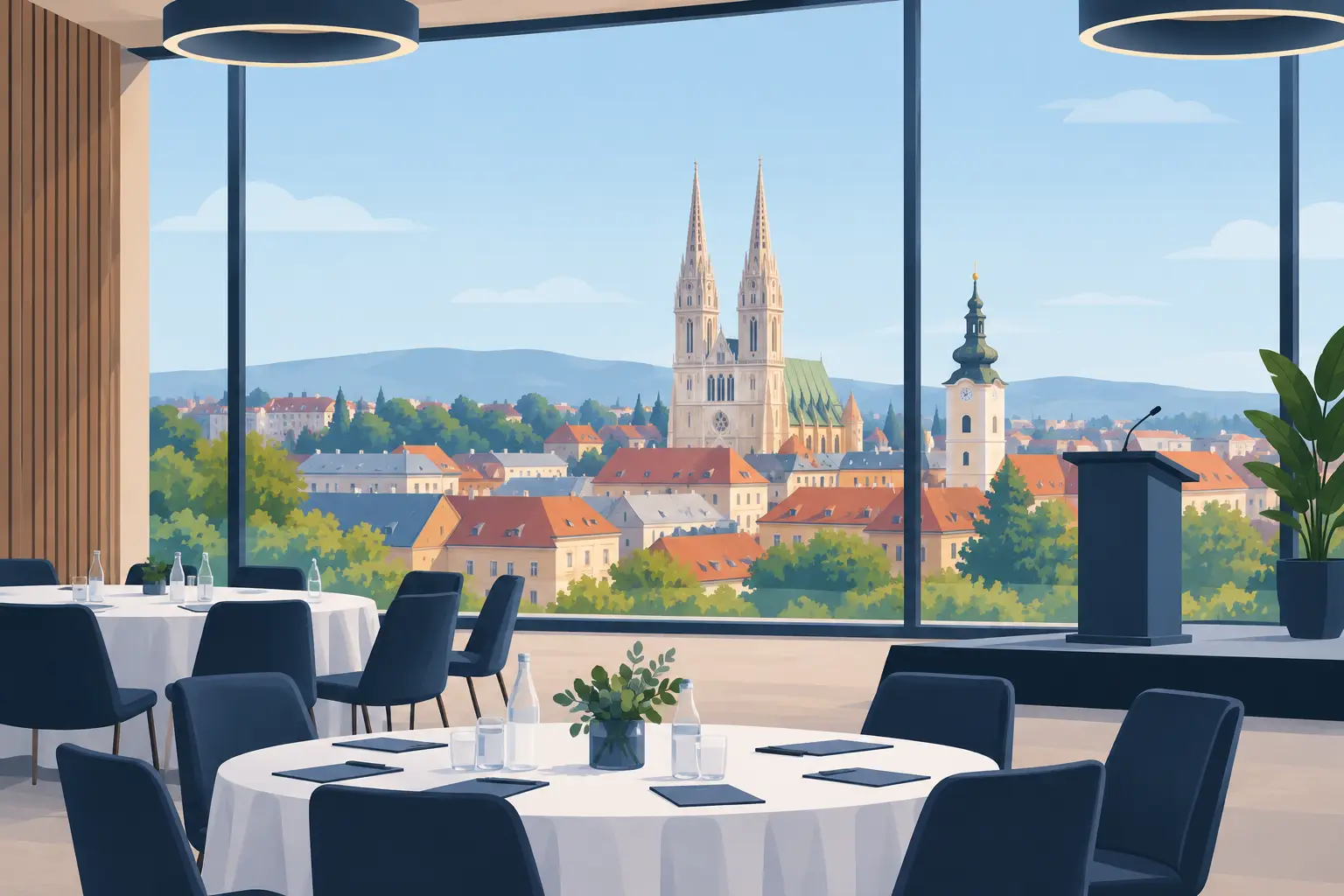
A gala dinner beneath chandeliers in the Upper Town, a product launch framed by contemporary architecture, or a private concert in a courtyard that has witnessed centuries of city life: Zagreb event venues can turn a business gathering into a genuine destination experience. Compact, cultured and exceptionally well connected, Croatia’s capital offers the polish international groups expect, with the warmth and originality that make an incentive or corporate occasion feel truly personal.

For planners, the appeal is not simply the choice of spaces. It is the ease of creating a programme around them. Delegates can move from a morning conference to a private museum visit, a chef-led tasting or an elegant dinner without losing valuable time to long transfers. Zagreb rewards thoughtful planning with moments that feel spontaneous, yet are carefully managed behind the scenes.

Why choose Zagreb for a corporate event?

Zagreb has the confidence of a European capital without the scale-related complexity of larger meeting cities. Its central districts are walkable, its hotel landscape includes respected international names and distinctive boutique properties, and its airport sits within straightforward reach of the city centre. For UK and international guests, this means less time in transit and more time together.

The city also has range. Austro-Hungarian grandeur, green parks, lively market culture and an increasingly assured gastronomic scene sit side by side. A formal board meeting can be followed by a relaxed aperitif in a leafy square; a conference can end with a private evening in the historic Upper Town. That contrast is valuable for groups who want a professional setting without a generic convention experience.

Seasonality deserves consideration. Spring and early autumn are particularly attractive for events that combine indoor business sessions with outdoor receptions, city walks and terrace dining. December brings Zagreb’s celebrated Advent atmosphere, which can be magical for festive incentives but requires early venue and accommodation planning. Summer offers long evenings, though planners should account for school holidays and the possibility that some guests may extend their stay to the coast.

Zagreb event venues with real character

The best venue is rarely the largest or the newest. It is the space that suits the purpose of the gathering, the personality of the guests and the rhythm of the wider programme. Zagreb can accommodate a substantial conference, but it is equally compelling for executive retreats, automotive presentations, fashion events, rewards trips and intimate celebrations.

Grand hotels and formal ballrooms

For conferences, awards ceremonies and gala dinners, established city-centre hotels offer reliable production infrastructure, experienced banqueting teams and accommodation under the same roof. This is often the most efficient option for a group with a full agenda, particularly where plenary sessions, breakout rooms and evening dining need to operate without complicated transfers.

The trade-off is that a hotel ballroom can feel familiar. The answer is not necessarily to avoid it, but to use it well. Consider a strong local design concept, Croatian floral styling, a welcome drink inspired by regional ingredients or entertainment that brings a sense of place without becoming a cliché. A ballroom provides operational certainty; the surrounding programme supplies the story.

Historic palaces, halls and cultural institutions

Zagreb’s historic fabric lends itself beautifully to receptions, seated dinners and high-touch client events. Elegant halls, heritage buildings and cultural venues bring immediate atmosphere, especially when guests arrive after a private walk through the lantern-lit Upper Town or a short funicular journey from the Lower Town.

These spaces make a lasting impression, but heritage comes with practical questions. Access for equipment, sound restrictions, loading windows, lift capacity and weather contingencies should all be verified early. A knowledgeable local production team is essential, particularly when the event calls for staging, complex lighting or a large-scale dinner service. When handled properly, the result can feel effortlessly exclusive.

Museums, galleries and design-led spaces

For a product presentation, leadership dinner or cocktail reception, Zagreb’s museums and contemporary cultural spaces can offer a sharper, more creative setting. Art, design and science collections provide natural conversation starters, while modern galleries often suit clean branding and carefully curated catering.

Capacity can be more limited than in a hotel, and exhibition schedules may restrict access, so these venues work best when the guest experience matters more than a conventional room layout. A private viewing before dinner, or a curator-led introduction for a smaller group, can transform a reception into an occasion with substance.

Rooftops, courtyards and garden settings

When weather allows, rooftop terraces and hidden courtyards reveal Zagreb at its most sociable. They are ideal for welcome cocktails, informal networking, summer suppers and incentive celebrations, particularly for guests who have spent the day in meetings and want the city to feel close at hand.

Outdoor venues need a credible Plan B, not merely a hopeful weather forecast. Tentage, indoor overflow space, heating for cooler evenings, power supply and noise limitations should be built into the plan from the outset. The most successful al fresco events preserve a sense of ease while ensuring that no decision is left to chance.

Match the venue to the event, not just the guest count

Capacity figures are useful, but they are only the beginning. A room that seats 180 for dinner may feel too formal for a 120-person incentive group seeking a relaxed, convivial evening. Equally, a beautiful courtyard may work wonderfully for drinks but become difficult for a presentation requiring clear sightlines and controlled acoustics.

Start with the desired guest feeling. Is the priority discretion, celebration, cultural immersion or high-energy brand theatre? Then consider the practical foundations: arrival flow, cloakroom space, accessibility, kitchen facilities, supplier access, Wi-Fi, power, security and the distance from the group’s hotel. In a city as compact as Zagreb, even a short transfer can be worthwhile for an exceptional setting, but timing must be realistic when an agenda is tightly choreographed.

For multi-day programmes, variety matters. Hosting every element in the hotel may be efficient, yet it can flatten the guest experience. A compelling format might pair a focused conference day with a private cultural reception, followed by a culinary evening in a different neighbourhood. Each movement through the city should feel purposeful rather than decorative.

Build an event programme around the city

A venue becomes more memorable when it is connected to what happens before and after. Zagreb is particularly strong for programmes that layer culture, food and informal discovery around the main event. Guests may begin with a market-inspired tasting, explore the Upper Town with an expert guide, meet a local artisan or enjoy a private performance before taking their seats for dinner.

For incentive groups with additional time, Zagreb also works as a gateway. The vineyards and castles of continental Croatia, the Plitvice Lakes region and the Adriatic coast can be incorporated into a wider itinerary, depending on the group’s interests and flight pattern. This is where experienced destination management makes a meaningful difference: venue selection should support the complete journey, rather than exist as an isolated booking.

At Perfecta Travel, event programmes are designed with that full picture in mind, combining hand-picked settings with multilingual on-the-ground support, trusted suppliers and careful contingency planning. The aim is to make every guest-facing moment feel natural, while the operational detail remains quietly under control.

Questions to settle before confirming a venue

Before contracts are signed, clarify whether the quoted hire includes furniture, basic AV, security, cleaning, staffing and exclusive use. Confirm minimum food and beverage spend, overtime rates, supplier restrictions and the precise timings for access, set-up and dismantling. These details can significantly affect both budget and production freedom.

It is also wise to test the event journey from the guest’s perspective. Where does the coach stop? How many steps are involved? Can umbrellas be distributed quickly if rain arrives? Is there a calm place for VIPs, speakers or guests needing privacy? Small operational considerations often determine whether a beautiful venue feels luxurious or merely complicated.

Zagreb’s greatest strength is that it does not force organisers to choose between substance and atmosphere. With the right setting and a programme shaped around the city’s own character, a meeting can finish with guests feeling they have experienced far more than another event venue – they have encountered Croatia at its most engaging.

Sustainable Balkan Travel, Designed with Care

A quiet sail into a Dalmatian cove, an early walk through Slovenia’s vineyard hills, lunch in a family-run konoba, or a private guide bringing Sarajevo’s layered history to life: sustainable Balkan travel is not about reducing a holiday to compromises. It is about designing every moment with greater care – for the places visited, the people who make the journey possible, and the traveller’s experience of them.

For discerning travellers, sustainability should feel considered rather than performative. Across South-East Europe, that means allowing enough time for each destination, choosing partners with genuine local roots, travelling beyond the busiest months, and creating programmes that leave value in the communities guests have come to know.

Why the Balkans reward a more considered pace

The Balkans offer extraordinary variety within relatively compact distances. In one carefully planned journey, guests may move from Croatia’s Adriatic islands to Bosnia and Herzegovina’s Ottoman-era towns, Montenegro’s dramatic bays, and Slovenia’s alpine landscapes. Yet proximity should not be mistaken for a reason to rush.

A sustainable itinerary gives destinations room to reveal themselves. Rather than treating Dubrovnik, Kotor or Lake Bled as a series of brief stops, a well-paced programme builds in overnight stays, unhurried guided visits and time with local hosts. Guests gain a more meaningful connection, while local restaurants, guides, small producers and accommodation providers benefit from longer, more considered visits.

This approach is particularly valuable in places affected by seasonal pressure. The Croatian coast is magical in high summer, but spring and autumn often offer a richer balance of mild weather, available tables, calmer streets and a more natural rhythm of local life. For travel designers, shifting even part of a programme into the shoulder season can improve the guest experience as well as spread economic benefit more evenly.

Sustainable Balkan travel begins with intelligent routing

Transport is often the most complex part of a multi-country holiday in South-East Europe. The region’s coastlines, mountains and borders create spectacular journeys, but public connections are not always suited to premium timings, family needs or luggage-heavy itineraries. Private vehicles remain the right choice for many programmes, especially where comfort, privacy, safety and access to remote experiences matter.

The more sustainable choice is therefore not always a simplistic one. It is often about reducing unnecessary mileage through intelligent routing. Arriving in one city and departing from another can avoid retracing a long journey. Combining nearby experiences into one day, choosing accommodation for its location rather than simply its facilities, and building two- or three-night stays into key destinations can all limit time on the road.

Where rail is practical, it can add genuine pleasure. Slovenia in particular lends itself to slower scenic travel, while selected routes across Croatia and Serbia can complement a wider private touring programme. On the water, a carefully planned yacht charter or island-hopping itinerary can replace repeated overland transfers, provided it is designed around sensible distances, responsible anchoring and experienced local crews.

For groups and MICE programmes, routing becomes even more significant. One well-located hotel, a concentrated programme of nearby cultural and culinary experiences, and coordinated transfers can offer guests a more elegant event while reducing needless movement across a destination.

Choose stays that belong to their setting

Luxury accommodation and responsible travel can sit naturally together when properties are selected with discernment. A grand heritage hotel in a historic city, a boutique retreat that employs locally, a vineyard stay with regional produce at its heart, or a small island property with thoughtful resource management can each contribute to a stronger sense of place.

The question is not whether every stay must look the same. It is whether the property respects its surroundings and brings tangible value to the destination. This may be visible in local employment, seasonal menus, conservation initiatives, reduced single-use plastics, energy awareness or partnerships with nearby artisans and producers.

For travellers, these choices also tend to create the most memorable stays. A breakfast of Istrian cheeses and olive oil, a suite in a restored stone house, or a wine tasting led by the family who tend the vines offers something no interchangeable hotel experience can replicate.

Let local knowledge shape the experience

The most valuable sustainable choices are often made behind the scenes. A local guide can steer a private visit away from the most congested hour. A destination specialist can recommend a little-known village restaurant rather than a generic tourist stop. A trusted skipper knows which bays are appropriate to visit and when to avoid them.

This is why supplier relationships matter. The Balkans are not one uniform destination, and responsible practice looks different in an Adriatic island community, a rural Albanian mountain village or the centre of Belgrade. Local expertise helps ensure that a programme is not only beautiful on paper but appropriate on the ground.

Meaningful experiences need not be labelled as worthy to be worthwhile. They may include a cooking lesson using ingredients from a nearby market, a visit to a small olive estate, a traditional craft workshop, a guided wildlife outing with a respectful operator, or dinner in a home where stories are shared as generously as food. The best of these encounters are intimate, professionally arranged and mutually beneficial.

It also means setting clear expectations. Not every small producer can accommodate a coach party at short notice, and not every fragile natural site is suitable for unrestricted access. Premium travel has the flexibility to work around those limits, favouring private or small-group formats, advance planning and experiences that respect local capacity.

Protecting landscapes without distancing guests from them

From Plitvice’s lakes and Durmitor’s highland scenery to the wetlands of the Neretva Valley and Albania’s rugged coastline, the region’s natural beauty is central to its appeal. It deserves more than a passing photograph from a viewpoint.

Well-designed nature experiences place qualified guides, timing and group size at the centre. Walking routes should suit guests’ abilities and the season. Wildlife observations should keep a respectful distance. Boating should follow local rules on speed, mooring and sensitive habitats. In national parks and protected areas, guests should be encouraged to remain on marked trails and take every item away with them.

There are trade-offs. A remote lodge may deliver remarkable immersion but involve a longer transfer. A private boat offers freedom and comfort, yet its environmental impact depends on vessel type, route, speed and operating practice. Honest itinerary planning weighs these factors rather than presenting every premium choice as automatically sustainable.

Food is one of the region’s strongest local connections

Gastronomy is a particularly rewarding way to make travel more locally rooted. The Balkans are shaped by distinct agricultural traditions: oyster farms and olive groves on Croatia’s coast, truffles and wines in Istria, mountain cheeses in Montenegro, fragrant produce in North Macedonia, and deeply regional cooking in Bosnia and Herzegovina and Serbia.

Choosing seasonal, locally sourced dining supports the producers behind those flavours and gives guests a truer taste of place. It can be as refined as a chef-led tasting menu or as simple as a leisurely lunch at a rural household. What matters is authenticity, quality and a connection between table and landscape.

Thoughtful planners also consider food waste and dietary requirements well before arrival. Advance communication allows restaurants and hosts to prepare properly, reducing waste while ensuring every guest feels generously looked after.

Make sustainability part of service, not an add-on

For travel advisers and tour operators, responsible travel succeeds when it is integrated into the programme from the first conversation. Ask what matters most to the client: slower travel, conservation, local cuisine, low-season access, family-friendly learning or a particular cultural connection. The answer will shape the right journey.

Perfecta Travel approaches regional itinerary design through this practical lens, combining hand-picked local partners with the reassurance of detailed planning, multilingual support and 24-hour assistance. A sustainable programme should never leave guests to navigate difficult logistics alone. It should feel effortless because the choices behind it have been made carefully.

The most enduring Balkan holidays are rarely those that attempt to see everything. Leave space for a spontaneous swim, a longer conversation with a winemaker, or one more sunset over the Adriatic. That space is where a journey becomes personal – and where travel can give back as much as it takes.

Croatia Villa Rentals for Exceptional Holidays

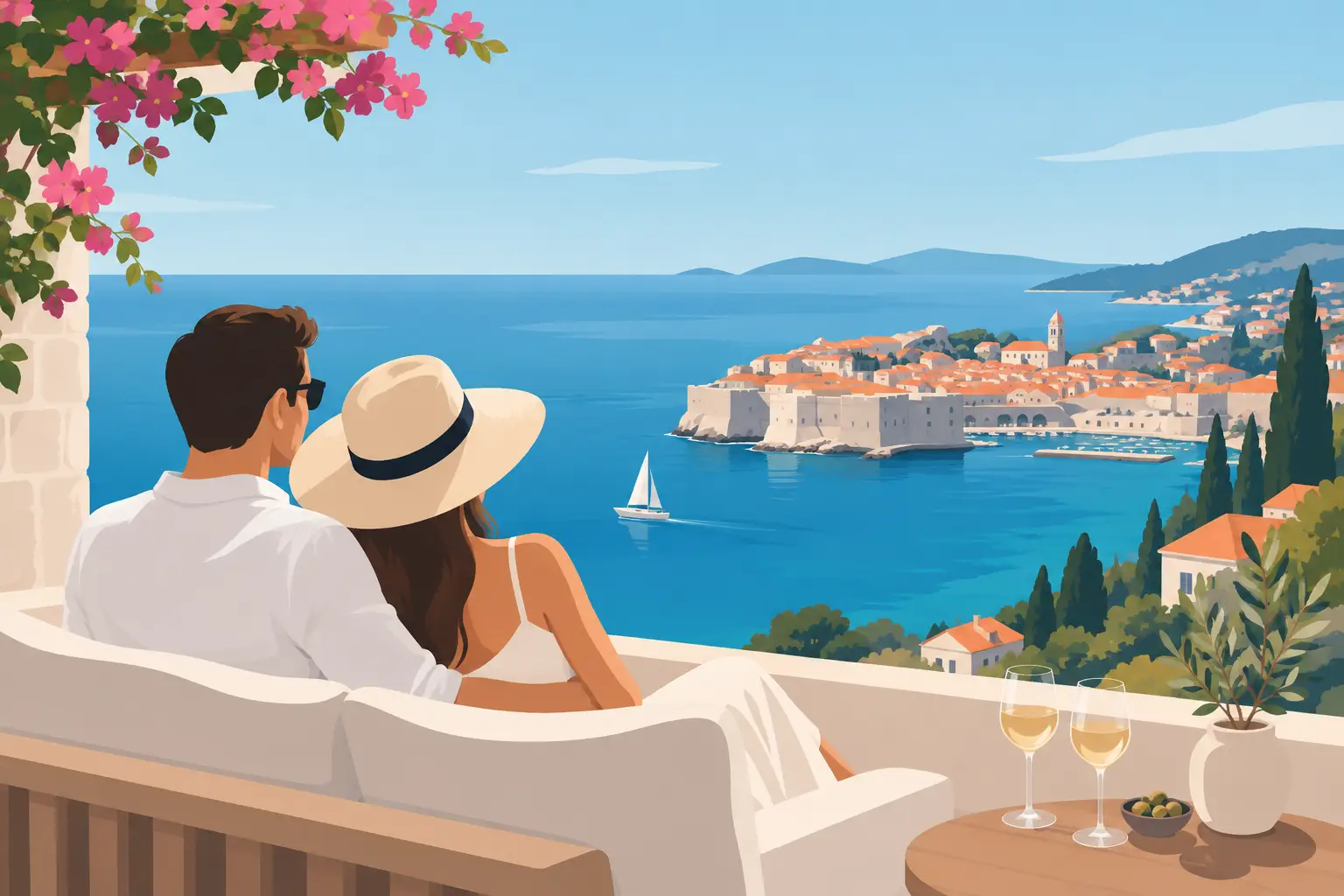
A limestone terrace warmed by the late-afternoon sun, a table laid for dinner beside the pool, and the Adriatic stretching towards a constellation of islands: Croatia villa rentals create the kind of holiday rhythm that hotels rarely can. For families, friendship groups and couples travelling with purpose, a private home offers space to slow down while keeping Croatia’s most compelling experiences within reach.

The best villa is not simply the one with the largest pool or the most photogenic sea view. It is the one that suits the journey around it: close enough to a historic town for an evening promenade, well positioned for a private boat day, or tucked into the countryside for total privacy and exceptional food. Choosing well turns accommodation into a defining part of the experience rather than a place to return to at night.

Croatia Villa Rentals: Choose the Right Setting

Croatia’s coastline is wonderfully varied, and each region creates a different villa holiday. The right choice depends on the pace your guests want, who is travelling, and whether the villa is the centrepiece of the stay or a beautiful base between destinations.

Split and the Dalmatian coast

The area around Split works particularly well for travellers who want variety without constant unpacking. A villa in the hills above the city, around Trogir, or along the Makarska Riviera can combine sea views and privacy with access to Roman heritage, lively waterfront restaurants and day trips by private boat.

This is also one of the strongest choices for multi-generational families. Children can enjoy the pool and beaches, while adults have easy access to wine estates, island lunches and private guided tours of Split’s UNESCO-listed old town. In high summer, however, road traffic around popular coastal towns requires careful planning. A well-timed private transfer or boat charter can make a considerable difference.

Hvar, Brač and the islands

Island villas bring a more exclusive, unhurried atmosphere. Hvar is ideal for guests drawn to elegant restaurants, beach clubs and a polished social scene, balanced by quiet coves and vineyards away from Hvar Town. Brač is often better suited to families and groups seeking a calmer stay, with handsome stone villages, clear water and a more relaxed local character.

Island logistics deserve professional attention. Ferry timetables, private boat transfers, luggage handling and late arrivals must be planned around the villa’s exact location. The reward is considerable: breakfast overlooking the sea, a captain waiting for a day among the Pakleni Islands, and the freedom to return to a private terrace long after the day visitors have departed.

Dubrovnik and southern Dalmatia

For travellers who want cinematic scenery and heritage in equal measure, the Dubrovnik region is difficult to surpass. Villas south of the city, on the Pelješac Peninsula or near Cavtat can provide space and tranquillity while preserving access to Dubrovnik’s medieval walls, Lokrum Island and the vineyards of Pelješac.

A villa immediately outside the Old Town may seem the obvious choice, yet properties slightly further away can offer better privacy, easier vehicle access and more generous outdoor space. For many groups, this is the smarter luxury. A private driver makes dinners and sightseeing effortless, while a yacht or speedboat opens up the Elaphiti Islands for a day on the water.

Istria, Kvarner and inland Croatia

Istria appeals to travellers who place gastronomy at the heart of a holiday. Restored stone villas among olive groves and vineyards offer a different Croatia: truffle hunting near Motovun, wine tastings, coastal lunches in Rovinj and relaxed days around the pool. The landscape is gentler, the food culture deeply rooted, and the pace is often more restorative than the busiest parts of Dalmatia.

Kvarner combines handsome coastal resorts with islands such as Krk, Cres and Lošinj, while inland villas can suit guests seeking nature, privacy and value. These regions are especially rewarding in spring and autumn, when walking, cycling and food-led experiences are at their best.

What Distinguishes a Truly Good Villa

Luxury is personal. For one party, it means a contemporary property with a gym, cinema room and professional kitchen. For another, it is an immaculately restored historic house where local stone, shutters and a shaded courtyard tell a more memorable story. The important point is to look beyond bedroom numbers.

For families, secure pool access, bedroom configuration, shaded areas and proximity to a shop or beach matter more than a dramatic clifftop setting. For a group of friends, separate suites, sound considerations and an inviting dining area may be priorities. Couples may prefer a smaller, discreet home where the pool, view and service create a sense of complete escape.

It also pays to check how a villa lives rather than how it photographs. Is the outdoor dining terrace comfortably shaded at lunchtime? Are all bedrooms genuinely comparable? Is the final approach steep or narrow? Does the property have reliable air conditioning throughout, particularly in upper-floor bedrooms? These practical details protect the holiday experience.

The strongest properties pair their setting with thoughtful service. Pre-arrival shopping, a private chef, in-villa wellness treatments, childcare, local hosts and a well-stocked wine selection can be arranged according to the group. There is a balance to strike: some guests want every moment curated, while others prefer a few exceptional arrangements and the freedom to follow their own pace.

Build the Holiday Around the Villa

A villa holiday need not mean staying in one place. Croatia is made for journeys that combine a few nights of private relaxation with cultural discovery and time on the water. A group might begin in Split, spend several nights at a villa on Brač, then continue south to Dubrovnik. Others may pair an Istrian villa with Zagreb and Slovenia, or combine the Dalmatian coast with Montenegro for a more expansive Adriatic itinerary.

The villa becomes especially valuable after a day of experiences. Guests can return from sailing, a cooking class, a national park or a private city tour to their own pool and dining table rather than a busy hotel lobby. It gives an itinerary breathing space, which is often the difference between seeing a destination and genuinely enjoying it.

For travel designers and concierge teams, this flexibility is also commercially useful. A villa can accommodate a family or group in a way that keeps everyone together, while private transport and hand-picked experiences allow the programme to remain highly tailored. Yet villa travel has its own operational demands: arrival windows, cleaning schedules, chef access, marina transfers and local regulations all need careful coordination.

This is where a Croatia-based destination specialist adds reassurance. Perfecta Travel can match the property to the itinerary, arrange trusted local services and provide the on-the-ground support that premium guests expect when plans change. It is a considered approach that protects both the guest experience and the travel professional’s reputation.

When to Book and What to Plan For

July and August bring the warmest sea, the fullest restaurant scene and the highest demand for Croatia villa rentals. They are excellent months for families tied to school holidays and guests seeking a vibrant coastal atmosphere, but the most sought-after homes are often secured far in advance. For larger villas, waterfront locations and island properties, early planning is essential.

May, June, September and early October can offer an even more refined experience. The sea is inviting from late spring into autumn, restaurants are easier to book, and private touring feels more relaxed. September is particularly attractive for couples and food-focused travellers, with warm water, grape harvest activity and softer light across the coast.

Before confirming, establish the essentials clearly: transfer time from the airport or port, deposit and cancellation terms, local tourist taxes, pool heating where relevant, housekeeping frequency, and what is included in the rate. Guests should also understand whether a car is advisable. In some locations it offers welcome freedom; in others, private transfers and boats are far more enjoyable than navigating narrow roads or finding parking.

The most memorable Croatian villa holidays leave room for the unexpected: an extra swim before breakfast, a detour to a family-run konoba, an invitation to taste olive oil from the owner’s grove. Start with a villa that feels right, then let the destination shape the days around it.

How to Organise a Balkans Corporate Retreat

A leadership meeting overlooking the Adriatic, a private dinner within Dubrovnik’s historic walls, or a team hike through Slovenia’s alpine valleys can change the character of a company gathering. To organise a Balkans corporate retreat well is to pair that sense of occasion with precise planning: the right destination, a clear business purpose and trusted local delivery at every stage.

For MICE planners, travel designers and companies seeking more than an interchangeable hotel conference, the Balkans offer an unusually rich canvas. Croatia, Slovenia, Montenegro, Bosnia and Herzegovina, Serbia, North Macedonia and Albania can deliver coastal glamour, mountain air, compelling history and exceptional hospitality within one carefully managed programme.

Why the Balkans suit high-value corporate retreats

The region works particularly well for retreats that need to feel rewarding without becoming performative. A board can meet in a discreet waterfront villa near Split, then move from strategy sessions to a private sailing afternoon among the islands. A sales team can gather in Ljubljana, where a walkable capital, elegant hotels and access to lakes, vineyards and alpine scenery support a focused three-day stay.

The appeal lies in contrast. Delegates may begin the day in a polished meeting room and end it at a family-run winery, an Ottoman-era courtyard or a quiet cove reached by private boat. These are not experiences added merely to fill an itinerary. When chosen with care, they create the informal conversations and shared memories that help a retreat continue to matter after everyone returns home.

Value is another consideration. Premium standards are readily available across the Balkans, often with greater flexibility and individuality than more established European retreat destinations. However, value should not be confused with choosing the lowest rate. The most successful programmes invest in appropriate transport, considered hosting, excellent food and enough unstructured time for delegates to enjoy the destination.

How to organise a Balkans corporate retreat around a clear purpose

Before selecting a hotel or sending a save-the-date, decide what the retreat must achieve. Is the purpose strategic alignment, leadership development, client appreciation, team recognition or creative thinking? The answer informs every practical decision, from the destination’s travel time to the balance between meetings and experiences.

A compact executive meeting may benefit from the privacy of a heritage property or villa. A larger incentive group may need a resort with flexible event space, dependable room inventory and the capacity to host a gala evening. For distributed teams, a programme with a gentle pace and generous social time can be more valuable than an overfilled schedule.

It also helps to establish the non-negotiables early: delegate profile, budget range, desired travel dates, accessibility requirements, dietary needs and the level of formality expected. This gives local partners the information needed to propose options that genuinely fit rather than a generic collection of venues.

Select one anchor destination, then add contrast

Trying to see too much of the region is a common mistake. The Balkans reward curiosity, but a corporate retreat is not a sightseeing tour. For a two- or three-night programme, choose one strong base and allow the surroundings to do the work.

Dubrovnik offers historic drama, refined hotels and superb private cruising opportunities, although planners should account for seasonal visitor numbers. Split and the Dalmatian islands bring an energetic mix of Roman heritage, beach clubs, vineyards and yachts. Istria is ideal for gastronomy-led groups, with truffle hunting, olive oil tastings and handsome hill towns within easy reach.

For a different atmosphere, Slovenia combines sophisticated city stays with Lake Bled, the Julian Alps and vineyard country. Montenegro offers striking Bay of Kotor scenery and a more intimate coastal rhythm. Sarajevo is a memorable choice for groups interested in culture and perspective, while Belgrade can suit lively incentive programmes and contemporary dining.

A multi-country route can be exceptional when there is enough time. A five- or six-night journey from Dubrovnik into Montenegro, or from Ljubljana into Croatia, creates a natural sense of progression. It requires disciplined routing, border planning and clear communication, which is where experienced regional coordination becomes essential.

Choose accommodation that supports the programme

A beautiful hotel is only the beginning. Assess meeting room daylight, sound insulation, breakout capacity, Wi-Fi performance, luggage handling, privacy and the group’s ability to move easily between bedrooms, event spaces and dining areas. A property that is perfect for a couple’s holiday may not have the operational depth required for a senior leadership group.

Accommodation should also reflect the emotional tone of the retreat. A five-star coastal resort lends itself to incentives and celebrations. A restored palace hotel gives a smaller board gathering real character. An exclusive-use villa can encourage candour and connection, but it may need supplementary accommodation nearby for larger parties.

The strongest programmes often blend settings. Two nights in a city hotel followed by a final night on an island, for example, can create a memorable finale without asking delegates to unpack repeatedly. The transition must feel effortless to guests, even if it involves careful behind-the-scenes timing.

Protect the agenda with intelligent logistics

Travel time is part of the guest experience. Build realistic arrival windows, private transfers and luggage arrangements into the schedule, especially where international flight patterns vary. For coastal programmes, boats can be a highlight, but weather, marina access and embarkation timing must be assessed well in advance.

Ground transport deserves equal attention. A well-presented vehicle, professional driver and sensible journey lengths preserve the premium feel of a programme. For cross-border travel, passports, vehicle permits, waiting times and local regulations should be managed before guests arrive, not discovered at the frontier.

Create experiences that bring people together

The most effective retreat activities have a purpose beyond entertainment. They should invite participation without making anyone feel exposed, and they should give guests an authentic connection to place.

A private cooking class can work well for a mixed group because people naturally collaborate around food. A guided tasting with a local winemaker creates an easy setting for conversation. On the coast, a yacht day can combine small-group discussion, swimming and a long lunch at a waterfront konoba. In the mountains, a choice of gentle walks and more active routes respects different comfort levels.

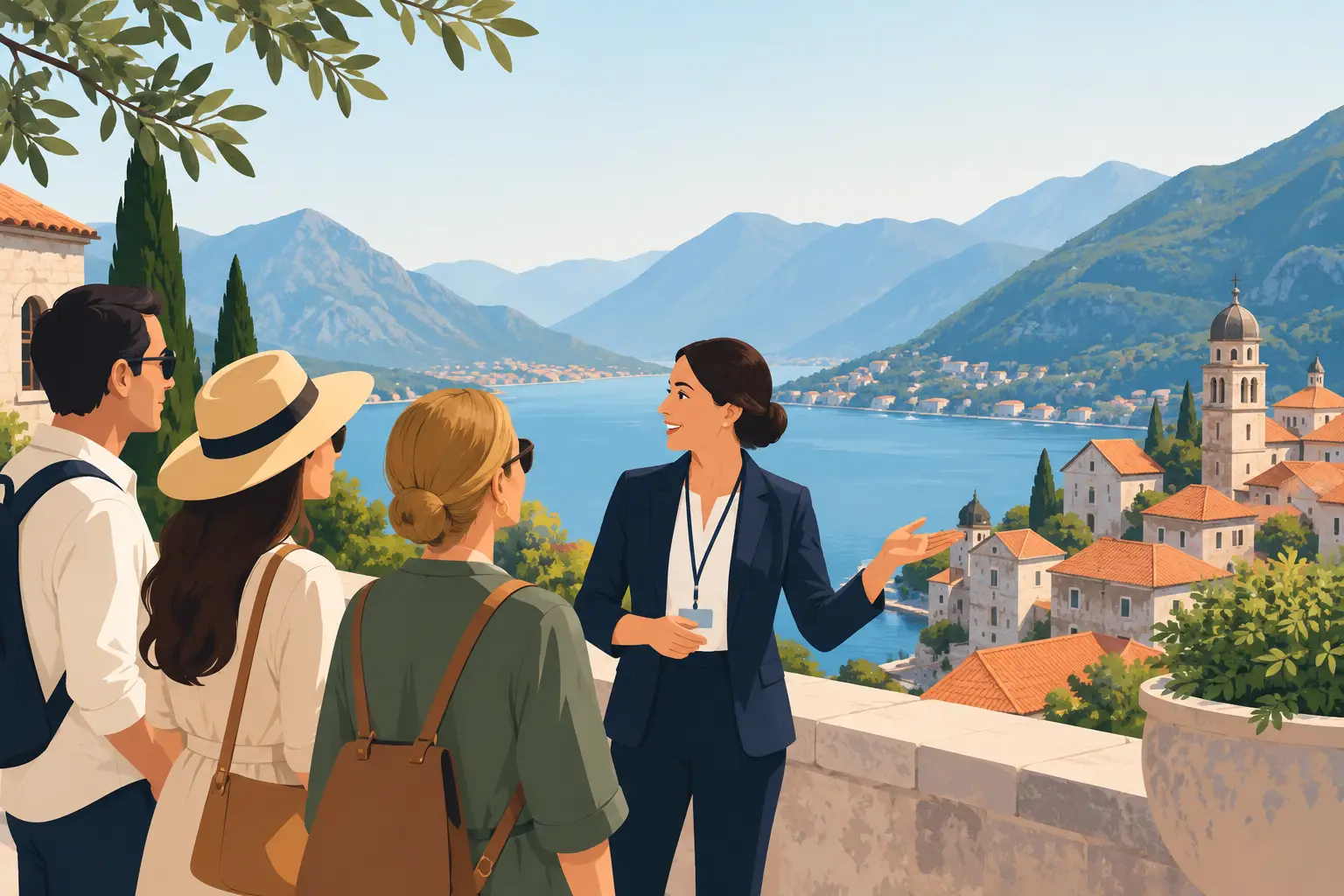
Cultural experiences benefit from access and interpretation. A private guide can reveal the human stories behind Dubrovnik’s stone lanes, Sarajevo’s layered heritage or Split’s Diocletian’s Palace. The difference is not simply exclusivity. It is having the right pace, knowledgeable hosts and the freedom to shape the experience around the group.

When planning an evening, avoid treating every dinner as a formal function. One beautifully staged gala may be right for an incentive, while a leadership retreat may gain more from an atmospheric restaurant, excellent local wine and a relaxed table plan. The setting should support the conversation you want to have.

Time the retreat with care

May, June, September and early October often provide the best balance of pleasant weather, destination energy and availability, particularly along the Adriatic. July and August offer long sunny days and warm seas but can bring higher rates, busier historic centres and heavier road traffic. They are often better suited to celebratory incentives than concentrated business sessions.

Outside the coastal season, city and inland programmes come into their own. Ljubljana, Zagreb, Belgrade and Sarajevo can offer strong cultural and culinary experiences throughout much of the year. Winter retreats can be particularly appealing in Slovenia’s mountain regions, provided the agenda and transport plan allow for changing conditions.

Dates should also be tested against major local events, public holidays and flight capacity. A local DMC can advise where a destination is likely to feel vibrant and where it may be under pressure, allowing planners to make decisions with confidence.

Put operational assurance behind the magic

A polished retreat depends on details guests rarely see: rooming lists checked against arrivals, welcome teams briefed, dietary requests confirmed, guides matched to the group, contingency vehicles on standby and a clear point of contact available around the clock. These elements protect the programme when flights are delayed, weather shifts or a last-minute request arises.

For international planners, one accountable regional partner is especially valuable. Perfecta Travel combines local destination knowledge across the Balkans with multilingual support, carefully selected suppliers and 24-hour assistance, helping partners deliver ambitious programmes with the discipline expected of a professional event operation.

The right retreat leaves delegates with more than photographs of remarkable coastlines or historic cities. Give them a setting that makes people feel looked after, curious and present, and the conversations begun in the Balkans can travel home with real momentum.

Top Croatia Hotels for a Tailor-Made Escape

A Croatian hotel is never simply a room for the night. It may be a former palace above Dubrovnik’s city walls, a waterfront address where the Adriatic laps beneath a private terrace, or a vineyard retreat that places Istria’s olive groves and truffle country at your doorstep. The top Croatia hotels are at their best when chosen as part of a thoughtfully paced journey, with private transfers, yacht crossings and local experiences shaped around each stay.

For travel designers and discerning guests, the question is not only which hotel is most luxurious. It is which setting will make the holiday feel effortless: a calm island retreat after a few lively days in Split, a sea-view suite for a honeymoon, or a sophisticated base from which to explore Istria’s hill towns and acclaimed restaurants. Croatia rewards this kind of considered planning.

Top Croatia hotels by destination and travel style

Dubrovnik: cinematic heritage and Adriatic views

Dubrovnik calls for a hotel that honours the drama of its setting while offering a welcome retreat from the energy of the Old Town. Hotel Excelsior Dubrovnik remains a distinguished choice for guests who want grand views of the medieval walls, immediate access to the city and a classic sense of occasion. Its position is especially compelling for first-time visitors, couples and small groups wanting private guided touring followed by sunset drinks overlooking the sea.

For a more intimate interpretation of Dubrovnik, Villa Dubrovnik offers a contemporary, design-led atmosphere just beyond the historic centre. It suits travellers who value privacy, discreet service and time by the water, while still being within easy reach of a private evening tour of the Old Town or a boat trip to Lokrum. The trade-off is deliberate: guests gain tranquillity and a more residential feel, rather than stepping straight into the city’s busiest streets.

Hotel Bellevue Dubrovnik is another excellent option for those who appreciate striking architecture and a sheltered bay setting. With its cliffside position above Miramare Bay, it works beautifully for a short luxury stay before continuing south to Montenegro or north towards Split. In high summer, arranging transfers and restaurant reservations in advance makes a meaningful difference to the experience.

Split: urban energy with island access

Split is a living Mediterranean city rather than a museum piece, and its best hotels should give guests a sense of that rhythm. Hotel Vestibul Palace, set within the fabric of Diocletian’s Palace, is a compelling choice for travellers who want history at close quarters. The setting is wonderfully atmospheric, particularly for couples and culturally curious guests, although luggage handling and vehicle access require careful coordination in the pedestrianised historic core.

For guests seeking more space and a resort-style atmosphere, Hotel Ambasador brings a modern waterfront perspective close to the centre. It offers an appealing balance for families, friendship groups and guests beginning or ending a private yacht itinerary. From Split, it is easy to pair a morning market visit or private palace tour with onward travel to Hvar, Brač or Vis.

The right hotel choice here depends on the purpose of the stay. A heritage address places the city’s ancient lanes outside the door; a waterfront property offers easier arrivals, broader facilities and a gentler transition between city exploration and island life.

Hvar: polished island glamour, thoughtfully paced

Hvar is often associated with its glamorous harbour scene, but the island has several distinct personalities. Palace Elisabeth, Hvar Heritage Hotel, overlooking the main square and harbour, is ideal for guests who want to be in the heart of the action. It has a sense of theatre that suits celebratory trips, milestone birthdays and clients who enjoy stepping from a refined hotel into the buzz of Hvar Town.

Those who prefer a quieter rhythm should consider Maslina Resort on Stari Grad’s more peaceful side of the island. Its low-key luxury, natural materials and wellness focus create a very different Hvar experience, one shaped by slow breakfasts, cycling, vineyard visits and time on the water. It is particularly effective after several nights in Dubrovnik or Split, when guests are ready to exchange city sightseeing for restorative island days.

Hvar is at its liveliest from June to early September. Travellers seeking the island’s beauty without the busiest harbour scene may prefer late May, June, September or early October, when private boating, winery visits and coastal walks feel more relaxed.

Rovinj and Istria: contemporary design and culinary depth

Rovinj has become one of Croatia’s most sophisticated coastal stays, combining Venetian character, excellent dining and easy access to Istria’s interior. Grand Park Hotel Rovinj is a standout for guests who appreciate contemporary architecture, expansive marina views and a strong food-and-wellness offering. Its location allows for an unhurried walk into the old town while retaining the space and facilities of a modern luxury hotel.

Hotel Monte Mulini, set within the Golden Cape forest park, offers another elegant option close to Rovinj’s shoreline. It is well suited to clients who want a more secluded setting without losing access to restaurants, galleries and the town’s harbour. Both properties work particularly well for pre- or post-cruise stays, incentive groups and gastronomic itineraries.

Beyond Rovinj, Meneghetti Wine Hotel & Winery provides a compelling inland-coastal alternative near Bale. This is a stay for guests who want Croatia through wine, olive oil and long, leisurely meals rather than through a busy promenade. It can be paired with private tastings, truffle hunting in season and visits to hilltop towns such as Motovun and Grožnjan. A car and driver are essential here, but that is part of the appeal: the journey opens up a more rural, flavour-led Istria.

Choosing the right luxury hotel for the itinerary

The most successful Croatian holidays rarely rely on one hotel alone. A classic route may begin in Dubrovnik, continue by private transfer or domestic flight to Split, then move to an island before finishing in Istria. Each change of setting should feel intentional, not like a succession of check-ins.

For a honeymoon, a combination of Dubrovnik and a quieter Hvar property creates an appealing balance of historic romance and private downtime. For families, larger suites, interconnecting rooms, reliable pool facilities and straightforward vehicle access often matter more than a central historic address. For a group of friends, proximity to restaurants, beach clubs and private charter departure points may take priority.

Season also changes the decision. Coastal hotels are most in demand during July and August, when the sea is warm and the islands are vibrant, but reservations should be made well ahead for the most sought-after room categories. Spring and autumn bring softer light, more availability and ideal conditions for food, wine, culture and active exploration. Some island properties operate seasonally, so an itinerary designed for April or late October needs especially careful hotel selection.

The details that make a premium stay feel effortless

A luxury Croatian hotel experience depends as much on what happens around the reservation as on the suite itself. Old towns have restricted vehicle access. Island schedules can be weather-sensitive. A late arrival may call for a private speedboat rather than a public ferry, while an early departure may require luggage arrangements that are invisible to the guest but carefully managed behind the scenes.

This is where local destination expertise brings genuine value. Room categories need to be assessed for their outlook, privacy and practical layout, not just their published description. Restaurant tables, spa treatments, private guides, marina berths and special celebrations all benefit from being arranged with the wider programme in mind. Perfecta Travel combines hand-picked accommodation with private logistics and on-the-ground support, so every transition is handled with the same care as the stay itself.

The finest Croatian hotel is ultimately the one that gives each day the right beginning and ending: coffee above terracotta rooftops, a private boat waiting in the harbour, a table set among Istrian vines, or the stillness of the Adriatic outside the window. Choose the setting around the journey your guests want to remember, and Croatia will provide the magic between each arrival and departure.

Finding Multilingual Balkan Guides for Luxury Tours

A guide can transform a private walk through Dubrovnik’s stone lanes, a wine tasting in Istria or a journey between Sarajevo, Kotor and Belgrade. Yet finding multilingual Balkan guides is not simply a matter of choosing someone who speaks the guest’s language. For premium travellers and travel professionals, the right guide must bring together cultural authority, emotional intelligence, polished hosting and an instinct for the practical details that keep a multi-country journey running beautifully.

Across South-East Europe, languages, histories and travel rhythms can change within a few hours on the road. That richness is precisely what makes the Balkans so rewarding. It is also why guide selection deserves the same care as choosing a hotel, yacht, driver or restaurant table with a view.

Finding multilingual Balkan guides with real destination depth

Fluency is the starting point, not the finish line. A guide may speak excellent English, French, German, Spanish or Italian, but a memorable experience depends on how naturally they communicate with the particular guests in front of them. The best guides know when to share the fascinating detail behind a Roman ruin and when to leave space for a couple to absorb the view. They can speak confidently to an art lover, entertain a multigenerational family and adjust their pace for guests who would rather linger over coffee than race through a checklist of sights.

This matters especially in the Balkans, where historical context needs sensitivity as well as knowledge. A guide discussing Sarajevo’s Austro-Hungarian architecture, the legacy of the former Yugoslavia or the cultural layers of Mostar should be accurate, balanced and attuned to the group. Guests deserve meaningful interpretation rather than rehearsed facts or oversimplified narratives.

Local depth also goes beyond headline landmarks. In Split, this may mean knowing which corners of Diocletian’s Palace are quietest early in the morning. In Ljubljana, it may be a thoughtful introduction to the city’s design culture. In Montenegro, it could be arranging a gentle walk above the Bay of Kotor with a perspective few day visitors see. The guide is not there merely to recite history. They are there to make a destination feel personal.

Language matching is more nuanced than it appears

Travel planners should be precise when discussing language requirements. “English-speaking” may be sufficient for a corporate incentive group, while a family travelling from France may feel more relaxed with a French-speaking guide who can explain regional cuisine and local customs in their first language. For some guests, a bilingual guide is ideal. For others, particularly on a complex itinerary with several specialist visits, separate guides with deeper local expertise may offer the stronger result.

It also helps to distinguish between conversational ability and professional guiding ability. A fluent speaker may be a superb host at dinner but not licensed or experienced enough to lead a detailed heritage visit. Equally, a highly qualified guide may not be the best personality match for a celebratory group looking for warmth, spontaneity and a relaxed holiday atmosphere.

The right decision depends on the itinerary. A three-night city break can often be enhanced by one exceptional guide who builds rapport quickly. A 14-day journey through Croatia, Slovenia, Bosnia and Herzegovina, Montenegro and Serbia requires careful continuity. Guests should feel looked after at every stage, while still benefiting from specialists who genuinely know each place.

Ask about guiding style, not just credentials

Credentials, licences and language certificates matter, particularly at protected heritage sites and museums. However, they cannot reveal how a guide manages the small moments that define service. Can they read a group’s energy after an early flight? Do they know how to accommodate a guest with limited mobility without making them feel conspicuous? Are they confident liaising with a restaurant, boat captain or hotel concierge when plans change?

A thoughtful briefing is invaluable. Share the group profile, interests, dietary requirements, walking preferences, key celebrations and any areas of particular sensitivity. A good local operator will then recommend a guide based on fit, rather than assigning whoever happens to be available.

Look for regional coordination, not isolated appointments

The Balkans should never be treated as a single, uniform destination. Each country has its own guiding regulations, languages, transport considerations and supplier relationships. A guide who is outstanding in Croatia may not be licensed to guide in Slovenia or Bosnia and Herzegovina. Border crossings, road conditions and local operating practices can also affect timing.

For travel professionals, this is where on-the-ground coordination makes the difference between an attractive itinerary on paper and an effortless guest experience. One trusted destination management partner can ensure that guides, drivers, hotels and experiences are briefed to the same standard, even as the journey crosses borders.

There is a trade-off to consider. Using one tour leader throughout a multi-country route can give guests welcome continuity and a familiar face. Bringing in local guides in each destination adds specialist insight and often stronger storytelling. The finest programmes frequently combine both: a knowledgeable host or tour leader for the overall journey, supported by carefully chosen local experts for city tours, wineries, national parks and cultural encounters.

This approach also creates flexibility. If weather affects a sailing day on the Adriatic, a private visit runs late or a border queue changes the arrival time, the team can revise the day intelligently. The guest should experience a beautifully paced holiday, not the mechanics behind it.

The qualities that distinguish exceptional guides

The strongest multilingual guides share a particular kind of discretion. They are engaging without being intrusive, informed without being overly formal, and capable of creating a sense of occasion without making the day feel staged. In luxury travel, guests often value the freedom to ask unexpected questions, pause for photographs or change direction because a café, gallery or market catches their attention.

They also understand the value of anticipation. A guide might arrange the most suitable entrance to avoid unnecessary steps, suggest a shaded terrace during the warmest part of the afternoon or time a coastal drive for the best light. These decisions may appear effortless to the guest, but they come from experience and close local knowledge.

For MICE groups and incentive programmes, additional skills become essential. Guides need confident group management, clear timing, familiarity with coach operations and the ability to work closely with event managers. They must keep a large group engaged while protecting the schedule, often across several languages. For a private family, by contrast, patience, adaptability and child-friendly storytelling may be the priorities.

Build guide selection into itinerary design

Guide availability should be considered early, especially for peak dates, major events and programmes requiring less common language combinations. The most sought-after professionals are often reserved well in advance for the summer season, festive departures and high-profile conferences. Early planning allows the itinerary to be shaped around the right people, rather than settling for a functional replacement later.

It is equally wise to plan the guide’s role alongside transport and experience design. A guide who joins guests in a luxury vehicle can offer context between stops and respond to spontaneous requests. A walking specialist may be perfect for a compact historic centre but not needed for a relaxed island day with a private skipper. There is no universal formula, only the most appropriate level of service for each day.

At Perfecta Travel, guide matching sits within a wider approach to itinerary management: hand-picked local experts, private transport, carefully timed experiences and round-the-clock operational support. It means travel designers can offer the romance of the region with the confidence that every moving part has been considered.

Questions worth asking before confirming a guide

Before a programme is finalised, confirm the guide’s professional language level, licence coverage and experience with the relevant guest profile. Ask whether they have led similar itineraries, whether they can accommodate specific mobility or dietary needs, and how they handle last-minute adjustments. For group travel, establish maximum group sizes, use of audio equipment and the plan for split activities or free time.

It is also worth asking what the guide is genuinely passionate about. A history specialist, food-focused storyteller, nature guide or art historian can add an entirely different dimension to an itinerary. Matching that passion to the traveller’s interests is often what turns an excellent day into the story guests repeat long after they return home.

The Balkans reward curiosity. With the right multilingual guide, every border crossing becomes a new chapter, every meal carries a local story, and even a quiet lane or roadside viewpoint can become part of an unforgettable journey.

Croatia Transfer Services for Tailor-Made Travel

A late arrival at Dubrovnik Airport, a villa above the sea, a private yacht departure from Split, lunch booked in a family-run konoba inland – each moment can be exceptional, provided the journey between them is handled with equal care. Croatia transfer services are not simply about getting from A to B. For a tailor-made holiday or a professionally planned group programme, they are the thread that holds the entire experience together.

For travel designers, concierge teams and discerning guests, the difference lies in local judgement. It is knowing when a direct coastal drive is the right choice, when a scenic detour through the Pelješac peninsula will transform the day, and when a water transfer makes more sense than time on the road. The best arrangements leave travellers free to enjoy Croatia’s remarkable landscapes, historic cities and island life without having to think about timetables, parking, luggage or unfamiliar road conditions.

Why Croatia Transfer Services Need Local Expertise

Croatia looks compact on a map, but its geography rewards thoughtful planning. The Dalmatian coast is shaped by mountains, islands and winding roads; ferry schedules are seasonal and can be affected by weather; and a journey that appears straightforward online may involve a port, a steep old-town access point or a border crossing.

A well-managed transfer programme considers the whole day rather than just the mileage. A private drive from Split to Dubrovnik, for example, can be an efficient point-to-point journey, or it can become a leisurely day of discovery with an oyster tasting in Ston, a pause at a viewpoint over the Adriatic and a table reserved for lunch. The right approach depends on the guests’ pace, interests, mobility and onward plans.

This is particularly valuable for multi-stop holidays. Travellers may arrive in Zagreb, continue to Plitvice Lakes, travel to the coast, visit several islands and depart from Dubrovnik. They need vehicles, drivers and timings that work as one considered itinerary, not a collection of isolated bookings. For groups and incentive programmes, that coordination also extends to luggage movements, flight monitoring, restaurant access, guide timings and contingency planning.

Private Transfers That Set the Tone of a Holiday

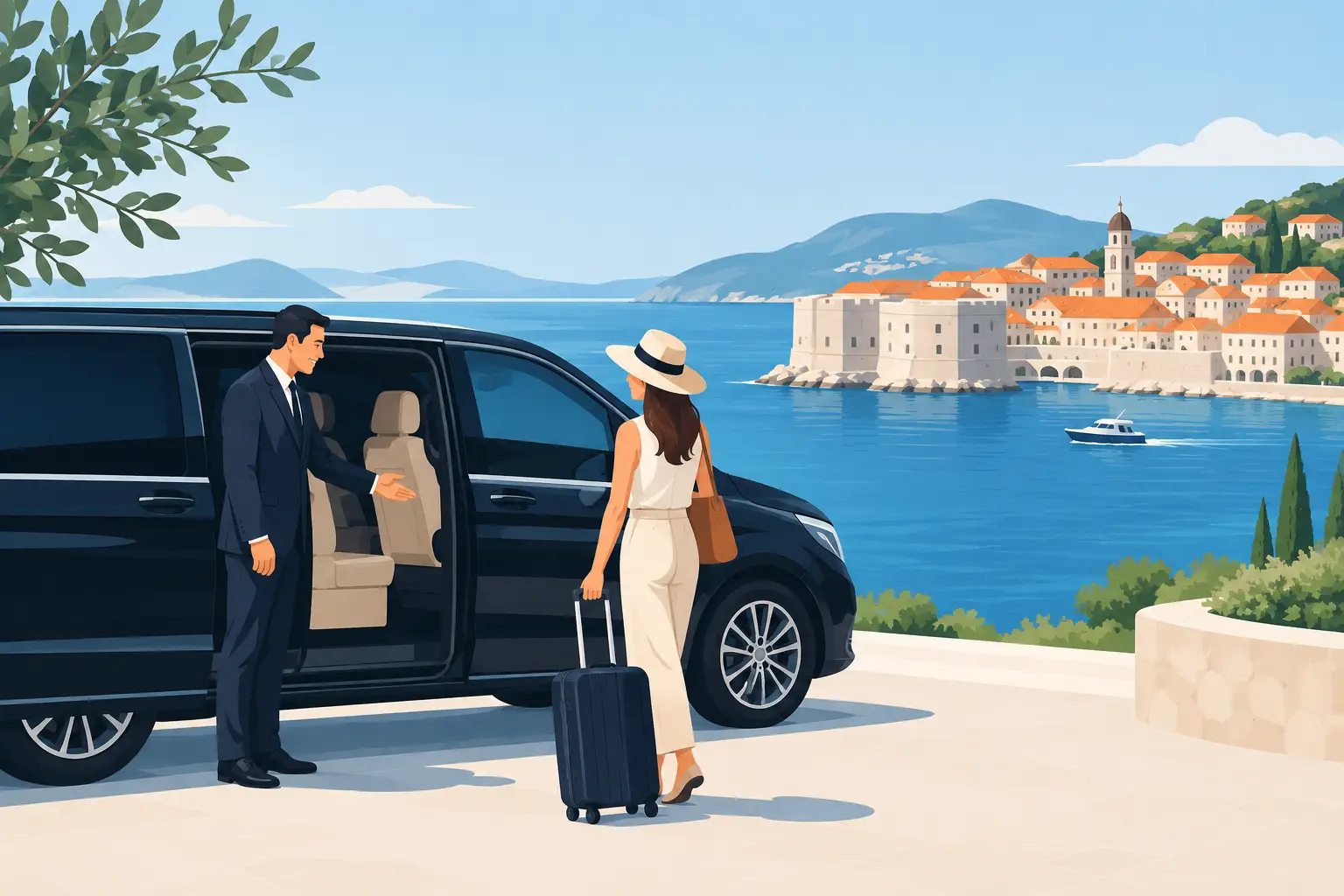
The first journey after a flight has an outsized effect on a guest’s holiday. A professional driver, a well-presented vehicle, assistance with luggage and a warm local welcome create immediate reassurance. For families travelling with children, correctly arranged child seats and space for buggies matter. For couples celebrating a special occasion, discretion and comfort matter. For a group of friends, the vehicle should suit both the party size and the luggage reality of a premium island-hopping holiday.

Private transfers offer the flexibility that scheduled transport rarely can. Guests can leave when they are ready, stop when something catches their eye and travel directly to their hotel, private residence, marina or rural estate. There is no need to negotiate a taxi queue after a delayed flight or work out how to carry bags across a busy ferry terminal.

Vehicle selection should never be an afterthought. An executive saloon may be ideal for two guests travelling lightly between city hotels. A spacious minivan works well for a family or small private party. Larger groups require coaches that are comfortable for longer routes and practical for hotel access. In historic centres such as Dubrovnik, Split and Trogir, the final approach may need careful planning because pedestrian zones and narrow streets can limit vehicle access. A driver who knows the most suitable drop-off point can make a considerable difference.

Airport, Port and Hotel Coordination

Arrival transfers demand more than a name board in an arrivals hall. Flight times should be monitored, airport meeting points clearly confirmed and drivers briefed on the accommodation, guest preferences and any special requirements. At ports, the process can be more complex: ferry berths, private marina access and tender arrangements all vary by location and season.

The same attention is required on departure. A pre-flight transfer should account for road conditions, airport procedures and the time needed to return a hire yacht or complete hotel check-out. The aim is calm, unhurried travel – especially at the end of an otherwise memorable journey.

From Coastal Roads to Island Crossings

Some of Croatia’s finest transfer routes are experiences in their own right. The road between Split and Makarska offers dramatic mountain-and-sea views. The journey from Dubrovnik towards the Konavle countryside reveals a quieter side of southern Dalmatia, with vineyards, stone villages and traditional restaurants. In Istria, transfers can be built around hilltop towns, olive oil estates and truffle-focused cuisine.

Island transfers require even more precise handling. Hvar, Brač, Korčula, Vis and Mljet each have their own rhythm, ferry connections and harbour logistics. A route may combine a private road transfer with a scheduled ferry, a private speedboat or a yacht charter. There is no single best option. A speedboat can save time and offer striking views, but it is weather-dependent and may not suit every guest. A ferry can be more practical for substantial luggage or vehicles, while a private yacht creates a celebratory start to an island stay.

When journeys cross borders, local coordination becomes still more important. Croatia can be paired beautifully with Slovenia, Bosnia and Herzegovina, Montenegro, Serbia, North Macedonia or Albania. Yet border waiting times, documentation, driver permits and route choices must be considered well before the travel date. A relaxed journey from Dubrovnik to Montenegro or from Zagreb towards Slovenia should feel effortless to the guest, even when several operational details are being managed behind the scenes.

The Value of a Driver Who Knows the Destination

A private driver is not a substitute for a specialist guide, and clear roles matter on a high-quality itinerary. A guide brings in-depth interpretation, stories and access to cultural context. A professional driver brings safe, comfortable transport, route knowledge and practical awareness of the destination. When both work together, the day flows naturally.

That local awareness is often most visible in small moments: choosing a quieter approach to a busy attraction, adjusting a departure time to avoid traffic, knowing where a vehicle can wait near a restaurant, or suggesting a beautiful but realistic stop en route. It also means recognising when not to add another stop. Guests who have spent a full day exploring Plitvice Lakes may prefer a direct, comfortable onward journey rather than an ambitious detour.

For travel trade partners, consistent driver standards protect the wider holiday design. The vehicle arrives on time, the driver understands the programme, and the guest is never left wondering what happens next. This reliability is especially essential for cruise extensions, weddings, corporate events and programmes with fixed reservations.

Planning Croatia Transfer Services Around the Guest

The most successful arrangements begin with a few practical questions: how many people are travelling, how much luggage will they bring, what is the purpose of the journey, and what level of pace do they enjoy? A couple on a honeymoon may welcome a scenic wine-country stop. A multigenerational family may prioritise shorter drives and flexible comfort breaks. A MICE group may need coordinated coach movements, dedicated host support and exact arrival windows.

Timing is equally personal. Summer brings long days and lively coastal traffic, while spring and autumn offer calmer roads and a different kind of beauty. In high season, early starts can make popular sites feel more intimate and protect the rest of the day from congestion. Winter travel may call for a more weather-aware approach in inland regions. Local advice turns these variables into sensible, guest-friendly decisions.

At Perfecta Travel, transfers are planned as part of the complete journey, with hand-picked transport partners, multilingual support and 24-hour assistance when plans need to change. That is particularly reassuring for travel professionals whose clients expect a polished experience at every stage, not only during headline excursions.

Comfort Is Also Peace of Mind

Luxury is not always defined by a particular vehicle category. Often, it is the confidence that someone has checked every detail. It is a driver waiting after a flight delay, a suitable vehicle arriving for an unexpectedly large amount of luggage, or a rapid adjustment when rough seas alter an island connection.

There are occasions when a shared transfer or scheduled ferry is the sensible choice, particularly for guests who value authenticity and do not mind travelling at a more fixed pace. Private arrangements are most valuable when time is limited, connections are complex, privacy is wanted or the journey itself is intended to be part of the holiday. The right recommendation should reflect the guest, not a one-size-fits-all formula.

When each transfer is viewed as a chance to add comfort, context and a little Croatian magic, the road, harbour or airport becomes more than a gap between experiences. It becomes the reassuring beginning of the next one.

Croatian Honeymoon Planning for Extraordinary Stays

A honeymoon in Croatia can begin with breakfast above Dubrovnik’s terracotta rooftops and end with dinner beside a silent cove on Hvar. Between those moments lies an extraordinary range of possibilities: Venetian palaces, vineyard roads, private yachts, wild national parks and island villages where the evening still follows the rhythm of the fishing boats. Croatian honeymoon planning is not simply a question of choosing an island. It is about creating the right pace, privacy and sense of occasion for two people who want every day to feel personal.

For couples seeking more than a standard beach holiday, Croatia offers a rare combination of polished luxury and genuine local character. The most memorable itineraries make room for both. A private guide can reveal the stories behind Split’s Roman walls; a skipper can find a bay beyond the busy harbour; and a carefully chosen hotel can turn an overnight stop into part of the experience.

Start Croatian honeymoon planning with the right rhythm

The strongest Croatian honeymoons are usually built around contrast. A few nights in a historic city bring energy, exceptional dining and cultural discovery. Time on an island offers slower mornings and space to switch off. Inland Istria or the Dalmatian hinterland introduces a different Croatia again, with olive groves, truffle-rich cuisine, wineries and stone villages.

For a first visit, eight to 12 nights allows enough time to enjoy two or three locations without continually packing and unpacking. A classic route might pair Dubrovnik with an elegant island stay, then continue north to Split and Hvar or Korčula. Couples with more time can add Istria, Plitvice Lakes or neighbouring Montenegro, Slovenia or Bosnia and Herzegovina for a wider South-East European journey.

Trying to cover every famous destination in one week can make a honeymoon feel like a checklist. Dubrovnik, Split, Hvar, Korčula and Istria all deserve time, but they do not all belong in the same itinerary. The best route depends on arrival airport, travel season, interests and whether a couple values long lunches and sea days over a more ambitious cultural programme.

Choose a season that suits your idea of luxury

May, June, September and early October are particularly rewarding for a Croatian honeymoon. The sea is inviting, restaurants and hotels are fully open, and the atmosphere is generally more relaxed than at the height of summer. September is especially appealing for couples who enjoy warm water, harvest flavours and softer light.

July and August deliver long sunny days and a lively coastal mood. They are ideal for those who want beach clubs, yacht charters and animated waterfront evenings, but the most sought-after suites, boats and tables should be secured well in advance. Private transfers and thoughtful timing matter more in these months, particularly around busy ports and popular old towns.

Spring and autumn are better for couples who wish to combine the coast with wine country, national parks and private touring. Some smaller island properties and seasonal restaurants may have limited opening periods outside summer, so expert local advice is valuable when shaping the route.

Create a honeymoon with distinct Croatian chapters

Dubrovnik is a natural opening or finale. Its limestone streets, sea-facing fortifications and discreet boutique properties create an immediate sense of occasion. Yet the city becomes even more rewarding when experienced beyond its headline sights: an early private walk before the crowds arrive, a sunset cruise beneath the walls, or a relaxed meal in the hills above the Old Town.

From Dubrovnik, the islands of Mljet, Korčula and Hvar offer different interpretations of romance. Mljet is for forested calm, clear-water swimming and nature. Korčula combines a handsome walled town with vineyards and a quieter, more intimate feel. Hvar suits couples drawn to glamorous hotels, excellent restaurants, sailing and a sociable evening scene. None is objectively better than the others. The right choice comes down to the desired atmosphere.

Split provides a compelling contrast, where life unfolds within and around Diocletian’s Palace. It works particularly well with a stay on Brač, Šolta, Vis or Hvar. Vis is a fine choice for travellers who prefer unhurried authenticity and dramatic coves over nightlife. Brač offers beautiful beaches, refined villas and easy access from Split, while Šolta remains a peaceful retreat for couples wanting privacy close to the mainland.

Istria deserves consideration for food-led honeymoons. Its rolling landscape, hilltop towns and coastal elegance feel distinct from Dalmatia. Here, days can be shaped around private tastings, truffle hunting in season, olive oil estates and intimate dinners featuring ingredients from the surrounding countryside. Pairing Istria with one coastal destination is often more satisfying than trying to force it into a fast island-hopping itinerary.

Make the journeys part of the experience

Croatia’s geography is wonderfully varied, but it rewards good logistical planning. Scheduled ferries are useful and authentic, although their timetables, seasonal frequency and luggage arrangements do not always suit a honeymoon built around flexibility. Private road transfers, carefully selected boat services and the right flight routing remove much of the friction.

A private yacht day should feel like freedom rather than a hurried circuit of famous swimming spots. The most successful charters leave room for an unplanned stop in a quiet bay, a leisurely lunch at a waterfront konoba and time to simply float in the Adriatic. For couples travelling in high season, a knowledgeable skipper can make a meaningful difference by choosing less congested anchorages and adjusting plans to conditions.

The same principle applies on land. A driver-guide can turn the road between Dubrovnik and Split into a day of coastal viewpoints, oyster tasting around Ston or a visit to a family-run winery. This is not only more comfortable than navigating unfamiliar roads after a long flight; it reveals places that are easily missed when travel is treated as dead time.

Choose stays that feel private, not isolated

Croatia has a growing collection of sophisticated hotels, heritage residences and private villas, but the property itself should match the intended mood. A harbourfront hotel puts restaurants, boats and evening walks at the doorstep. A cliffside suite delivers dramatic views and seclusion. A private villa can be perfect for couples who value their own pool, outdoor dining and a more independent rhythm.

Privacy has practical dimensions as well as romantic ones. Consider whether a property has direct sea access, whether the nearest town is walkable, how exposed the pool terrace feels, and how easily luggage can be managed through historic pedestrian centres. In Dubrovnik and Split, the most atmospheric accommodation may be within old streets where vehicles cannot reach the door. A well-managed arrival, porter assistance and clear transfer coordination preserve the magic.

For a longer stay, it can be worthwhile to combine two styles of accommodation: a characterful city hotel for three nights, followed by a spacious island retreat. The change of setting keeps the journey fresh without adding unnecessary travel days.

Add experiences with meaning, not just spectacle

A honeymoon itinerary does not need an activity planned for every hour. Often, the most luxurious detail is protected free time. That said, one or two experiences with real local connection can become the stories couples remember years later.

Consider a private cooking lesson in a family home, a wine tasting with the producer, an after-hours visit arranged around personal interests, or a guided walk that moves beyond the obvious landmarks. In Dalmatia, a meal centred on freshly caught fish, local olive oil and indigenous wines can be as memorable as a formal fine-dining reservation. In Istria, the appeal may be a cellar tasting followed by lunch overlooking vineyards.

For travel advisers, these are also the moments that distinguish a carefully designed honeymoon from an itinerary assembled from individual bookings. They require trusted local relationships, realistic timings and a clear understanding of what feels special to a particular couple. Some will want champagne on a yacht. Others will choose a near-empty beach, a picnic basket and no timetable at all.

Build in support without making it visible

The finest honeymoons feel effortless because the operational detail has been handled quietly in the background. Flights can be delayed, weather can alter a boating day, and a preferred restaurant may need a last-minute adjustment. Responsive local support turns these moments into small changes rather than disruptions.

That reassurance is especially valuable across island routes, where a missed connection can affect several elements of a programme. Working with a Croatia-based specialist such as Perfecta Travel gives couples and travel partners access to local knowledge, vetted suppliers, multilingual assistance and 24-hour support throughout the journey. It also allows for the kind of details that are difficult to arrange from afar: the right guide for a private interest, a discreet celebration in the suite, or an alternative plan ready when the sea changes its mind.

A Croatian honeymoon should leave space for the unexpected in the best sense: the cove you had not planned to find, the little restaurant recommended by a local, the sunset that keeps you at the table longer than intended. Plan the essentials with care, then let Croatia do what it does best – turn unhurried moments into lasting memories.

PROUD MEMBER OF

Perfecta Travel membership icon
1965.001.965,00