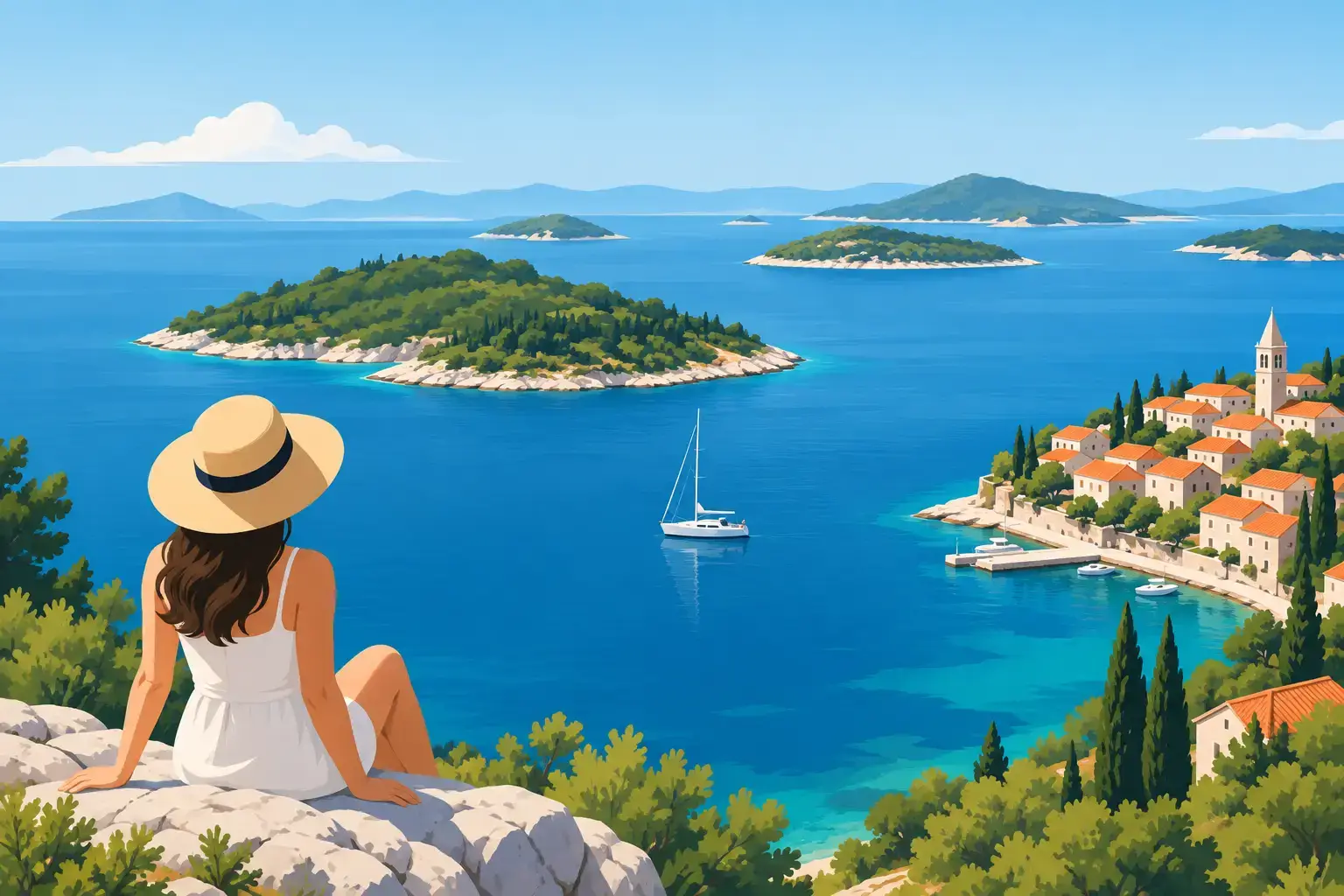
The first glimpse of Hvar Town from the water is reason enough to choose Croatian island hopping: Venetian stone façades rise above a glittering harbour, pine-covered slopes frame the bay, and lunch can begin within minutes of stepping ashore. Yet the real pleasure lies in moving beyond the famous view, following a route that reveals the Adriatic at its most varied – quiet coves, family wineries, walled medieval towns and islands where the rhythm remains delightfully unhurried.
Croatia has more than a thousand islands, islets and reefs, but a memorable holiday is not made by trying to see as many as possible. It comes from choosing the right sequence, allowing time to settle into each place, and making every crossing feel like part of the experience rather than a logistical interruption. For luxury travellers, families and small private groups, thoughtful planning turns an island journey into something genuinely personal.
Why Croatian island hopping needs careful design
The Dalmatian coast is wonderfully navigable, but the islands are not interchangeable. Hvar brings energy, historic grandeur and superb restaurants. Vis is more remote, with a gentler pace and compelling wartime history. Korčula combines a handsome old town with vineyards, olive groves and tranquil villages. Mljet offers forested calm and a national park shaped around saltwater lakes.
Their individual character is precisely why a route should be shaped around the traveller, not simply around ferry timetables. A couple seeking refined hotels, exceptional dining and time at sea may choose Hvar, Vis and Korčula. A multigenerational family may prefer shorter crossings, spacious villa accommodation and islands with sheltered swimming bays. Guests who are passionate about food and wine can linger in the Pelješac peninsula before continuing to Korčula, where the local Grk and Pošip wines reward a slower stay.
There is also a practical consideration. Public catamarans are efficient for straightforward point-to-point travel, especially in high summer, but their schedules can limit spontaneity and luggage arrangements. Private speedboats, luxury yachts and skippered day charters bring flexibility, allowing guests to pause for a swim in a secluded cove or arrive at a restaurant by water. The best choice depends on the season, the group’s priorities and whether the journey itself is intended to be a defining part of the holiday.
The most rewarding Croatian island hopping routes
Split, Hvar, Korčula, Mljet and Dubrovnik
This is the classic southern Dalmatian route, and it earns its reputation. Begin in Split, where Roman layers, lively markets and the dramatic setting of Diocletian’s Palace offer an atmospheric introduction before the coast opens out. From there, Hvar provides a glamorous first island stay, with elegant waterfront hotels, historic lanes and a remarkable view from the Spanish Fortress.
Rather than rushing onwards after one night, two or three nights in Hvar create room for its quieter side. A private boat can reach the Pakleni Islands for crystalline swimming and a relaxed lunch, while inland villages offer lavender fields, family-run konobas and vineyard scenery far removed from the harbour’s evening buzz.
Korčula follows beautifully, particularly for guests who prefer heritage and gastronomy over a late-night scene. Its fortified old town is compact, captivating and ideal for an evening stroll after a private tasting of local wines. Beyond the walls, Lumbarda’s sandy beaches and vineyards introduce a softer, more rural island landscape.
Mljet is best appreciated as a pause rather than a checklist stop. The national park’s lakes, woodland paths and Benedictine island create a restorative contrast to the busier ports. Continue to Dubrovnik for a final chapter of limestone streets, exceptional hotels and a sunset cruise beneath the city walls. Allow at least eight to ten nights for this route if the aim is to travel in comfort rather than merely cover distance.
Split, Brač, Hvar and Vis
For a shorter journey with a more relaxed, sea-focused character, this central Dalmatian itinerary is an excellent choice. Brač sits close to Split but feels distinctly removed from the mainland. Its white limestone has shaped landmarks around the world, while its inland villages, olive oil traditions and beaches give it considerable depth.
Hvar adds contrast, and Vis completes the route with a sense of escape. For decades, Vis was closed to foreign visitors due to its military importance, which helped preserve an authenticity that is increasingly rare on the Mediterranean. Komiža, on the western side of the island, remains a particularly enchanting base for guests drawn to fishing heritage, simple seafood and dramatic open-sea views.
The Blue Cave on nearby Biševo is often requested and can be striking in the right conditions. It is worth setting expectations carefully, however: access is weather-dependent and the experience can be busy in peak season. An early private departure, paired with lesser-known coves and a long lunch on Vis, is usually more rewarding than making the cave the sole purpose of the day.
What transforms an island itinerary into an exceptional holiday
The finest island programmes leave room for discovery while ensuring every essential detail has been anticipated. A private driver at the mainland airport, a knowledgeable skipper who understands local conditions, port assistance with luggage and restaurant reservations made well ahead of summer all make a material difference.
Accommodation should also follow the mood of each island. A heritage hotel within Korčula’s old town offers a very different experience from a contemporary waterfront retreat on Hvar or a private villa on Brač. Neither is inherently better. The right decision rests on whether guests value being able to walk to dinner, want complete privacy, or need generous space for children and extended family.
Food provides some of the most enduring island memories. Think just-caught fish grilled over olive wood, octopus prepared under a peka bell, sheep’s cheese from Pag, hand-harvested oysters from nearby Ston and wines poured by the people who make them. Private tastings and market-led cooking experiences bring valuable context, particularly for travellers who want to meet the local families behind Croatia’s distinctive culinary traditions.
Timing, weather and the luxury of pacing
May, June, September and early October are often the most appealing months for Croatian island hopping. The sea is inviting, restaurants and hotels are fully open, and the pace is generally more relaxed than in July and August. Spring offers green landscapes and excellent walking conditions, while September brings warm water and a harvest-season focus in many wine regions.
High summer has its advantages: long, luminous evenings, dependable warmth and a lively coastal atmosphere. It also requires early planning. Premium rooms, quality skippers, sought-after restaurant tables and the most attractive berths can be in high demand. For groups travelling at this time, private arrangements offer valuable control over timing and comfort.
Weather always deserves respect. The Adriatic is often calm, but winds such as the bura and jugo can affect sea conditions and scheduled crossings. A well-managed itinerary includes sensible alternatives: a private inland tasting, a guided old-town walk, a spa afternoon or an additional night in a well-chosen hotel. Flexibility is not a compromise when it is built into the programme from the start.
Local expertise behind every crossing
A polished island holiday appears effortless because the detail has been handled quietly in the background. This is where an experienced Croatia-based team is invaluable: matching vessels to the group, selecting dependable local partners, monitoring conditions, coordinating transfers and remaining available if plans need to change.
Perfecta Travel designs hand-picked island programmes that can begin with a private arrival in Split or Dubrovnik and extend across Croatia’s coast, islands and neighbouring Balkan destinations. With multilingual local support and 24-hour assistance, each journey can balance celebrated highlights with the small, unexpected moments that make a place feel truly known.
The Adriatic rewards travellers who resist the urge to hurry. Choose fewer islands, stay a little longer, and leave enough room for the unscheduled swim, the harbour-side aperitif and the conversation that lasts well beyond dinner.