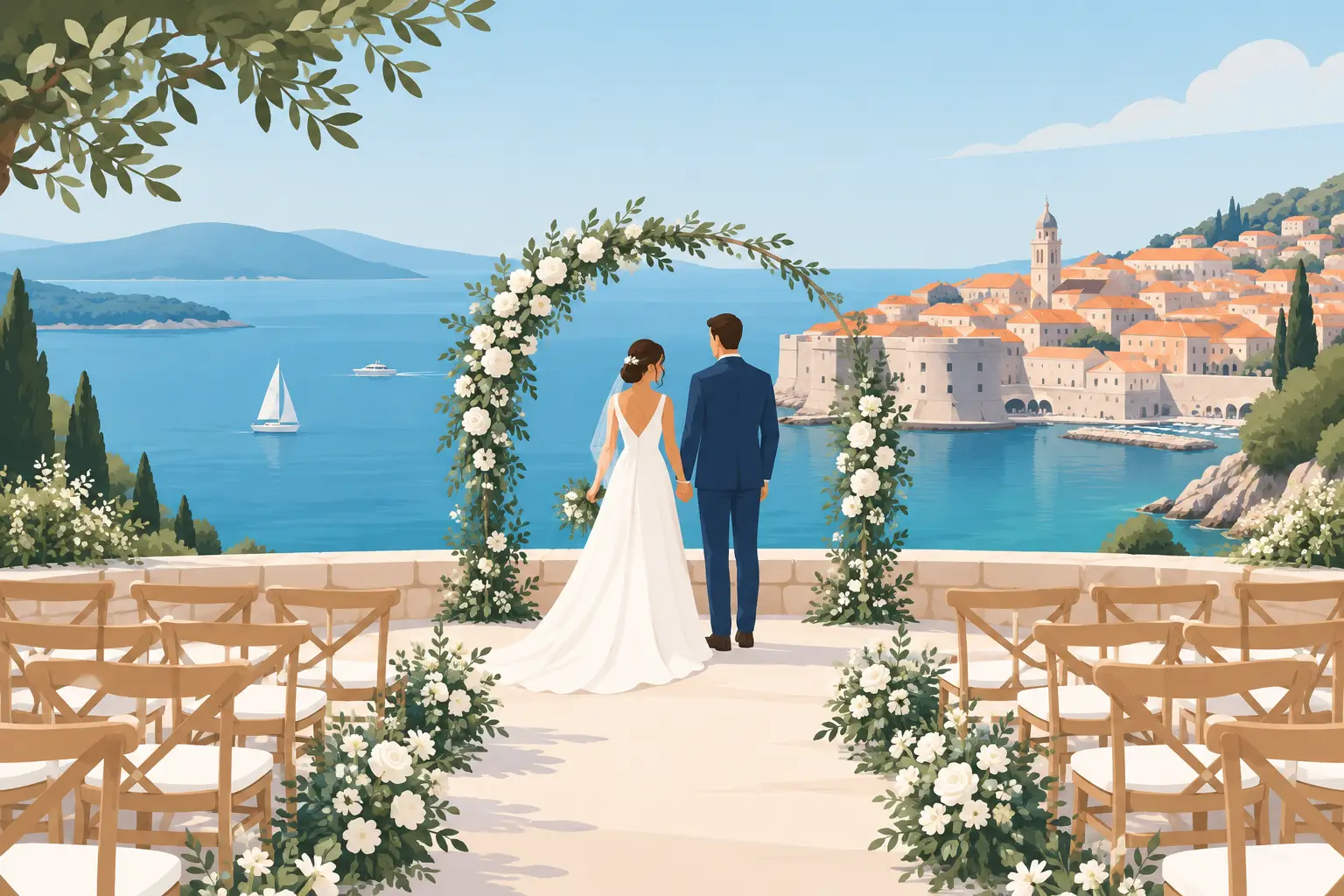
A ceremony on a stone terrace as the Adriatic catches the last of the afternoon light. A private boat carrying guests to dinner on an island. A table set beneath citrus trees, with Dalmatian wines poured as a local klapa group begins to sing. Croatia destination weddings can feel wonderfully cinematic, but their real appeal lies in the way a celebration can become a shared journey through one of Europe’s most captivating regions.
For couples and travel designers alike, Croatia offers far more than a beautiful backdrop. Its compact coastline, historic cities, islands, vineyards and exceptional food make it possible to create several distinct moments around one wedding weekend, while private transport and expert local planning keep the experience relaxed for every guest.
Why Croatia destination weddings feel so personal
Croatia has the rare ability to suit very different wedding visions without losing its sense of place. Dubrovnik brings grand walls, baroque courtyards and dramatic sea views. Split offers Roman heritage, lively waterfront energy and easy access to the islands. Hvar is made for glamorous evenings, stylish beach clubs and yacht arrivals, while Istria appeals to couples drawn to hilltop villages, olive groves and a slower, gastronomic rhythm.
Then there are places that reward a more individual approach: Vis for understated island romance, Korčula for medieval charm and excellent wine, Šibenik for a less expected Adriatic setting, or the Plitvice region for a celebration shaped by forests and lakes rather than the coast. The right destination is not simply the most photographed one. It is the place that reflects the couple, the size of the party and the kind of time guests want to share.
That flexibility matters. A couple planning an intimate celebration for 20 may prefer a private villa and chef-led dinner. A larger gathering may need a hotel with event infrastructure, multiple dining spaces and dependable room inventory. A three-day celebration involving guests from several countries calls for a different operational plan again, particularly where ferries, flights and luggage need careful co-ordination.
The wedding is only part of the experience
The strongest Croatian wedding programmes give guests a reason to arrive early and stay longer. A welcome evening in Dubrovnik can move from a private guided walk through the old city to an elegant dinner overlooking the harbour. Around Split, guests might sail to Brač or Šolta, visit family-run wineries or spend an afternoon swimming from a private boat. In Istria, truffle hunting, olive-oil tastings and cycling through vineyard country create an entirely different atmosphere.
These experiences also solve a common destination-wedding challenge: bringing together guests who may never have met. A shared cooking class, a sunset cruise or a market visit gives people an easy way to connect before the ceremony. For multigenerational groups, thoughtful pacing is essential. Some guests may want a full-day yacht charter, while others will value a gentle city tour, a spa afternoon or simply time by the pool.
A well-designed itinerary should offer choice without making the weekend feel over-programmed. The luxury is in knowing that every detail has been considered, while guests remain free to enjoy the moment at their own pace.
Choosing the right season and setting
May, June, September and early October are often ideal for weddings in Croatia. The weather is generally warm, the sea is inviting and destinations feel more comfortable than at the height of summer. These months can also offer better availability at sought-after properties and greater flexibility from specialist suppliers.
July and August deliver long, hot days and a brilliant social energy, especially on the islands. They are also Croatia’s busiest months. Higher accommodation costs, fuller restaurants and traffic around coastal hubs are realistic considerations, as is the heat for outdoor ceremonies. Couples set on a midsummer date should reserve key venues and rooms well in advance, and plan shade, water and a later ceremony time.
Location affects more than atmosphere. Island venues can be magical, but ferry timetables, weather conditions and arrival patterns need to be factored in from the first conversation. A private boat transfer can elevate the experience, yet it should be supported by a clear land-based alternative. Similarly, a heritage venue may have sound restrictions or limited vehicle access. These are not reasons to avoid remarkable places; they are reasons to plan them with precision.
Coast, islands or inland Croatia?
The Dalmatian coast is a natural choice for couples seeking sea views, historic architecture and a Mediterranean mood. It works particularly well for guests combining the wedding with a longer holiday through Split, Dubrovnik or Montenegro.
The islands offer privacy and a sense of occasion. Hvar has a polished, high-energy character, while Vis and Korčula feel more intimate and discreet. Island celebrations are especially rewarding when the group has at least three nights together, allowing enough time for arrivals and a day at leisure.
Inland Croatia and Istria offer a compelling alternative for couples who value food, wine and countryside elegance over beach glamour. These regions can be ideal in spring and autumn, with a softer palette, generous local produce and a more relaxed pace.
What makes the planning complex – and manageable
A destination wedding brings several suppliers into one highly personal occasion: venue teams, caterers, florists, musicians, photographers, transport providers, accommodation partners and, in some cases, yacht crews. The most successful celebrations have one clear operational lead who can connect those moving parts, anticipate pressure points and make decisions quickly on the ground.
For travel professionals, this is where a Croatia-based DMC provides real value. Local relationships can shape access to the most suitable venue options and trusted suppliers, rather than relying on generic packages. They also help balance aspiration with practical realities, from transfer times and dietary requirements to guest mobility, weather contingencies and local event regulations.
Perfecta Travel brings that local knowledge together with multilingual co-ordination, hand-picked experiences and 24-hour assistance, allowing planners to deliver a celebration that feels effortless to the couple and their guests. The objective is never to overcomplicate a wedding with unnecessary extras. It is to protect the magic by ensuring the operational foundations are sound.
Details worth deciding early
The venue should be chosen alongside guest accommodation, not separately. A spectacular ceremony location loses some of its appeal if guests face difficult late-night journeys or cannot secure suitable rooms nearby. It is also wise to establish the guest profile early: the number of children, older relatives, mobility needs, dietary requirements and likely arrival airports all influence the best destination.
Legal ceremonies require particular care. Documentation, residency requirements and translation rules can vary according to nationality and local authority. Many international couples choose a legal ceremony at home followed by a symbolic ceremony in Croatia, giving them more freedom over venue, timing and format. Either route can be beautiful, but clarity from the outset prevents last-minute stress.
Finally, build in a weather plan that feels like a genuine second choice, not a compromise. A covered terrace, stylish indoor room or elegant sailcloth structure means rain never has to alter the mood of the day. Along the coast, wind is as relevant as rain, particularly for boat plans and cliffside dining.
Extend the celebration beyond Croatia
Croatia’s position makes it especially attractive for a wedding followed by a wider Balkan journey. Guests can continue to Slovenia for lakes and alpine scenery, travel south to Montenegro’s Bay of Kotor, or combine Dubrovnik with Mostar in Bosnia and Herzegovina. For couples, this creates the possibility of a honeymoon that shifts naturally from island sailing to mountain landscapes, vineyard dinners and historic cities.
This regional dimension is best handled as a curated continuation rather than an ambitious checklist. A few well-paced days with private drivers, excellent hotels and time to absorb each place will always feel more luxurious than trying to cover too much ground.
The most memorable weddings in Croatia do not attempt to compete with the landscape. They let the landscape set the rhythm: an unhurried arrival, a table full of local flavour, a ceremony with the sea in view and enough thoughtful planning that everyone can be fully present.