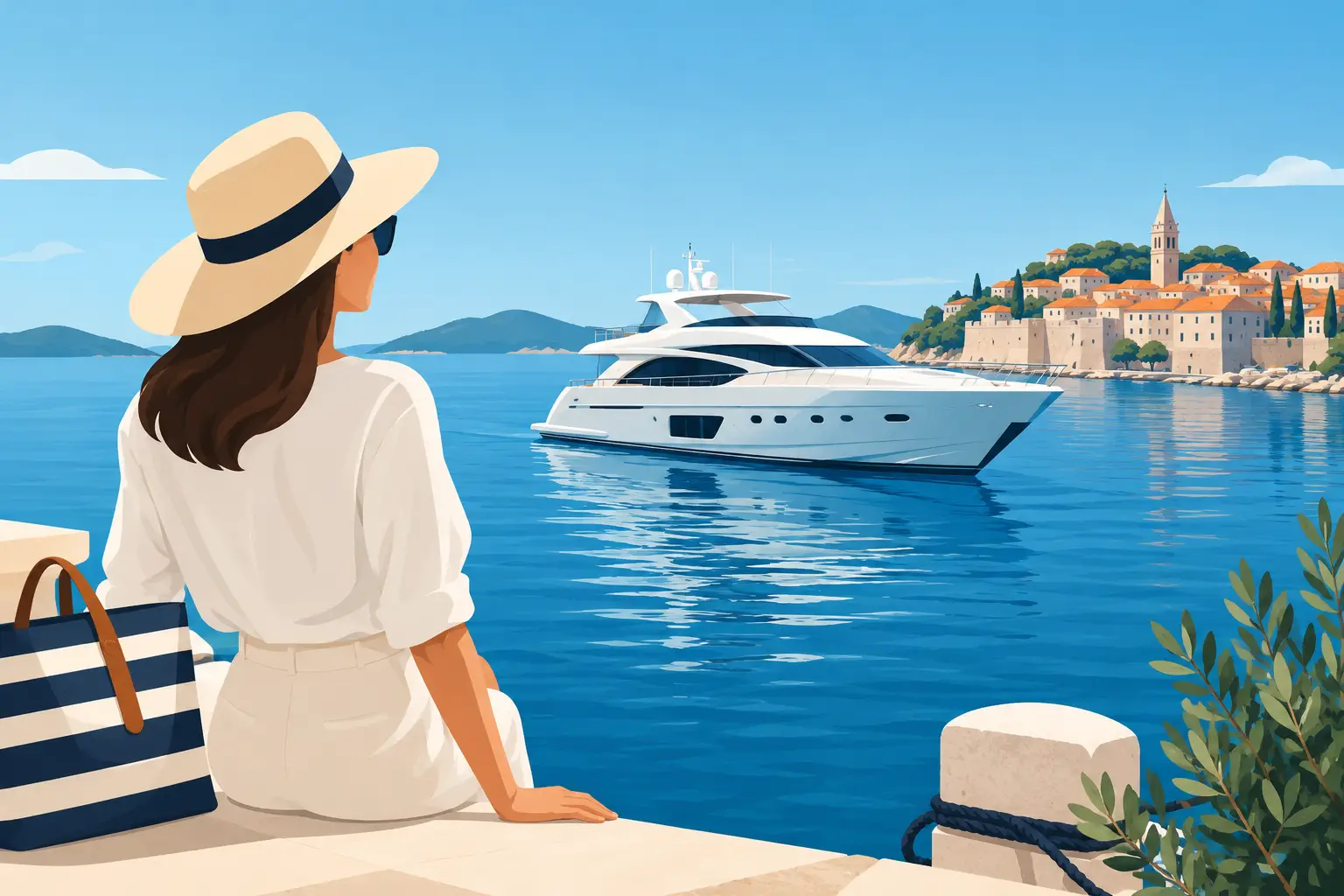
The difference between a pleasant week at sea and an exceptional Adriatic holiday is rarely the yacht alone. It is the moment you turn from a lively waterfront in Split towards a quiet anchorage off Hvar, arrive at a family-run konoba by tender, or wake beneath the walls of Korčula before the day visitors arrive. Knowing how to charter a Croatian yacht means making those moments possible while getting the practical decisions right from the outset.
Croatia offers an extraordinary range of sailing grounds, from the vineyard-covered islands of the Dalmatian coast to the raw beauty of Kornati National Park. Yet choice can feel overwhelming: bareboat or crewed, sailing yacht or motor yacht, Split or Dubrovnik, high summer or September. A well-planned charter gives travellers freedom, privacy and access to places that are difficult to experience from land, without leaving the details to chance.
How to charter a Croatian yacht: begin with the holiday you want
Start with the pace, not the boat. A family seeking calm swimming coves and short passages needs a different itinerary from a group celebrating with late dinners in Hvar Town, or a couple looking for quiet islands, fine dining and discreet five-star service. The yacht should support the holiday, rather than dictate it.
For first-time charter guests, a seven-night itinerary from Split is often the most flexible introduction. The central Dalmatian islands are close enough for relaxed daily cruising, yet varied enough to combine Brač, Hvar, Vis, Šolta and the Pakleni Islands. Split also has excellent international connections and a wide choice of marinas, crew and vessels.
Dubrovnik is ideal for a more southern route, particularly for guests who wish to pair a city stay with the Elaphiti Islands, Mljet National Park and Korčula. One-way charters between Split and Dubrovnik can be spectacular, but they require careful planning, a larger cruising commitment and usually a higher budget. They suit travellers with at least a week, preferably longer, who value the journey as much as the destinations.
The northern Adriatic, including Istria, Kvarner and the Kornati archipelago, has a distinctly different character. It is less about the headline beach clubs of central Dalmatia and more about national parks, clear bays, historic ports and excellent regional gastronomy. This can be a compelling choice for returning visitors and clients looking beyond the most familiar routes.
Choose the right type of yacht
The most suitable yacht depends on comfort expectations, group composition, budget and appetite for sailing. Croatia has a deep fleet, but the best vessels in popular periods are reserved early.
Sailing yachts and catamarans
A monohull sailing yacht brings guests closer to the elemental pleasure of the Adriatic: the sound of the wind, quiet passages under sail and a classic sense of arrival in small harbours. It is an excellent option for confident sailors or groups happy with a more intimate layout. Space below deck is usually more limited than on a catamaran of similar length.
Catamarans are often the preferred choice for families and friendship groups. Their broad decks, stable ride and generous cockpit create an easy social setting, while separate hulls give guests more privacy. They are especially comfortable at anchor. The trade-off is price, and in smaller marinas a catamaran may have fewer berth options or higher mooring costs.
Motor yachts, gulets and superyachts
A motor yacht is suited to guests who want to cover greater distances in comfort, with polished service and a more flexible daily rhythm. It can make a Split-to-Dubrovnik route more realistic within a week, although fuel costs need to be considered carefully. A motor yacht is not necessarily the most relaxed choice in peak season, when popular berths and restaurants still need advance arrangements.
Traditional wooden gulets offer a leisurely, sociable alternative, with generous deck space and a resident crew. They work particularly well for multigenerational families or groups that want a floating private villa with an unhurried itinerary.
For fully tailored luxury travel, a superyacht can provide the highest levels of accommodation, cuisine, water toys and crew-to-guest service. It also demands the most detailed pre-charter planning, from dietary requirements and tender operations to preferred wines, beach clubs and discreet private experiences ashore.
Decide between bareboat, skippered and crewed charter
A bareboat charter gives qualified sailors the most independence. At least one guest must hold an accepted skipper’s licence and a VHF radio certificate. The named skipper also takes responsibility for navigation, weather decisions, docking and the vessel throughout the charter. It is rewarding, but it is a genuine hands-on commitment rather than simply a holiday with a yacht as the setting.
A skippered charter offers a strong middle ground. The skipper handles the navigation and local conditions, while guests retain a casual, independent atmosphere. This choice is popular with travellers who would like to take part in sailing but prefer an expert on board when entering busy harbours, choosing anchorages or responding to a change in weather.
A fully crewed yacht adds a captain, hostess, chef or larger professional team according to the vessel. It is the natural choice for travellers who want their time devoted entirely to swimming, dining, exploring and relaxing. A good crew does much more than steer the yacht. They read the mood of the group, know when to suggest a hidden bay, can adjust plans around the weather and make the experience feel effortless.
Understand what your charter budget includes
The advertised weekly yacht rate is an essential starting point, but it is not the final holiday cost. The inclusions vary according to yacht type and charter arrangement, so a transparent proposal should set out every expected expense before confirmation.
For bareboat and skippered charters, guests should allow for fuel, marina or town quay fees, provisions, water toys, final cleaning, and skipper or hostess fees where applicable. A refundable security deposit may also apply. In high summer, berth prices can rise significantly in sought-after harbours, especially around Hvar, Vis and Dubrovnik.
Crewed motor yachts and larger luxury vessels often work with an Advance Provisioning Allowance, usually calculated as a percentage of the charter fee. This covers fuel, food and drink, port charges, communications and other operating costs. The captain manages the fund, keeps records and returns any unused balance at the end. It allows the itinerary to remain flexible, but it also means final expenditure depends on how the guests choose to travel.
Ask early about VAT, mandatory extras, delivery fees for one-way routes, cancellation terms and crew gratuities. There is no single correct budget because a quiet itinerary at anchor has very different running costs from a week of frequent cruising, premium marina berths and high-end dining ashore.
Select the right season and route
July and August bring the warmest sea, longest days and highest energy. They are ideal for guests who enjoy a lively atmosphere, but marinas, restaurants and headline islands need reservations well in advance. A skilled captain can find calmer alternatives, although absolute solitude is less realistic during peak weeks.
May, June, September and early October often offer the most balanced Croatian charter experience. The weather is generally beautiful, the water is inviting, and there is more room to be spontaneous. September is particularly appealing for food and wine-focused itineraries, with warm sea temperatures and a more relaxed rhythm on land.
The Bora, a dry north-easterly wind, and the southerly Jugo can affect conditions at different times of year. Neither should discourage travellers, but they are reminders that an itinerary must have flexibility. A professional crew and local charter manager will not force a route simply because it appeared on the first draft. They will make thoughtful adjustments that protect both comfort and the experience.
Plan the details before embarkation
The most memorable yacht charters feel personal because the planning has been precise. Before arrival, share more than cabin preferences. Let your charter team know about dietary needs, favourite wines, children’s ages, swimming confidence, anniversary plans, desired activity level and whether the group values privacy or social energy.
This is also the point to arrange the experiences that transform a sailing week into a wider Croatian journey. A private guide can reveal the stories behind Dubrovnik’s stone streets; a vineyard visit on Hvar or Korčula can add depth to an afternoon ashore; a chef-led dinner, truffle tasting or private transfer to a heritage hotel can extend the holiday before or after the charter.
For travel designers and agencies, a Croatia-based DMC provides particular reassurance where yacht charter meets a broader itinerary. Perfecta Travel can coordinate yacht selection with private transfers, luxury accommodation, guides and on-the-ground support, ensuring that the journey works as one considered programme rather than a collection of separate bookings.
Make room for the unexpected
The finest Croatian yacht charters leave a little space in the plan. A restaurant recommendation from the captain, a sudden wish to stay longer in a beautiful bay, or a weather-led change of island can become the memory guests talk about long after they return home.
Choose the yacht with care, reserve the essentials early and let local expertise shape the route. Then allow the Adriatic to do what it does best: turn a beautifully organised holiday into something that feels wonderfully unplanned.