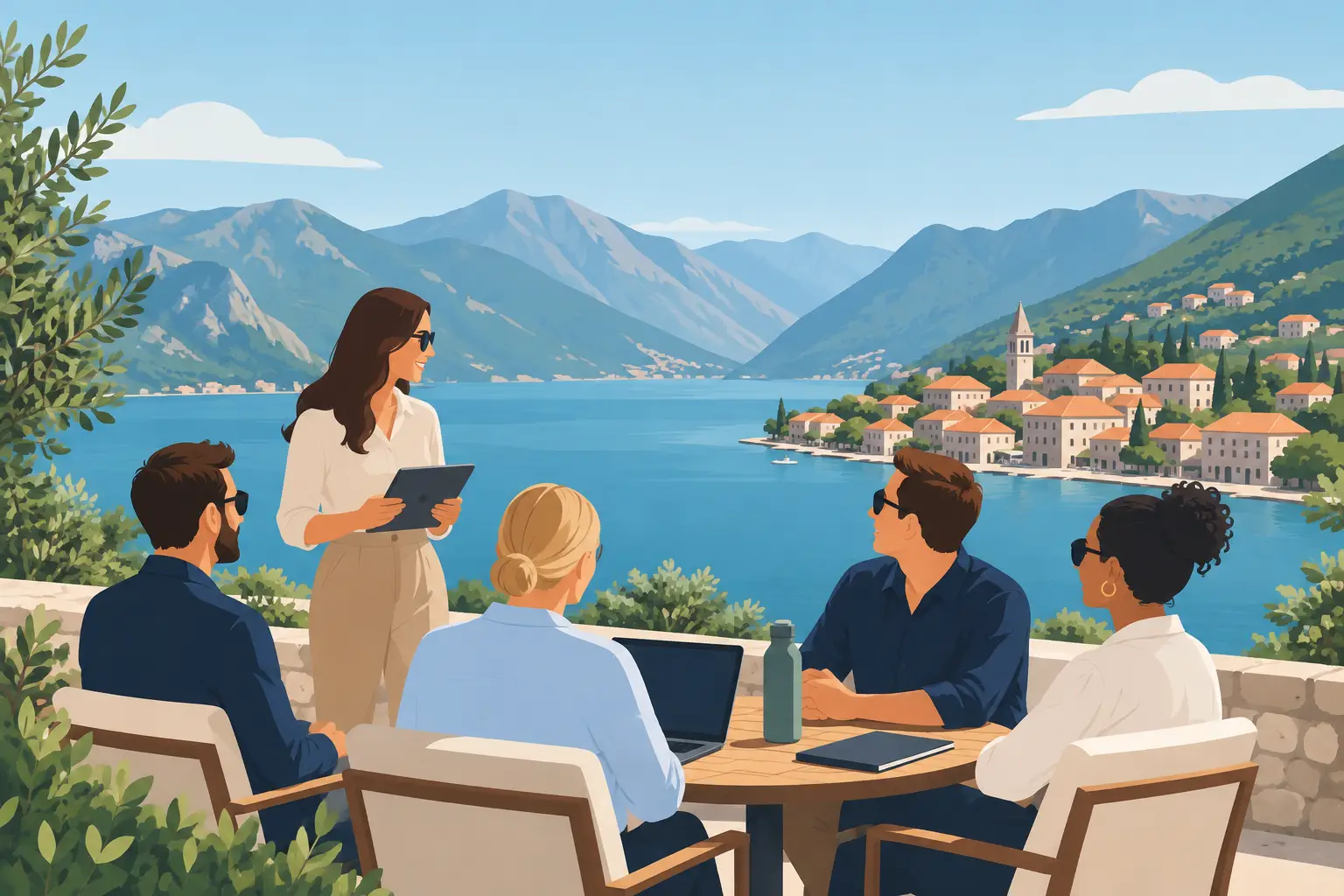
A leadership meeting overlooking the Adriatic, a private dinner within Dubrovnik’s historic walls, or a team hike through Slovenia’s alpine valleys can change the character of a company gathering. To organise a Balkans corporate retreat well is to pair that sense of occasion with precise planning: the right destination, a clear business purpose and trusted local delivery at every stage.
For MICE planners, travel designers and companies seeking more than an interchangeable hotel conference, the Balkans offer an unusually rich canvas. Croatia, Slovenia, Montenegro, Bosnia and Herzegovina, Serbia, North Macedonia and Albania can deliver coastal glamour, mountain air, compelling history and exceptional hospitality within one carefully managed programme.
Why the Balkans suit high-value corporate retreats
The region works particularly well for retreats that need to feel rewarding without becoming performative. A board can meet in a discreet waterfront villa near Split, then move from strategy sessions to a private sailing afternoon among the islands. A sales team can gather in Ljubljana, where a walkable capital, elegant hotels and access to lakes, vineyards and alpine scenery support a focused three-day stay.
The appeal lies in contrast. Delegates may begin the day in a polished meeting room and end it at a family-run winery, an Ottoman-era courtyard or a quiet cove reached by private boat. These are not experiences added merely to fill an itinerary. When chosen with care, they create the informal conversations and shared memories that help a retreat continue to matter after everyone returns home.
Value is another consideration. Premium standards are readily available across the Balkans, often with greater flexibility and individuality than more established European retreat destinations. However, value should not be confused with choosing the lowest rate. The most successful programmes invest in appropriate transport, considered hosting, excellent food and enough unstructured time for delegates to enjoy the destination.
How to organise a Balkans corporate retreat around a clear purpose
Before selecting a hotel or sending a save-the-date, decide what the retreat must achieve. Is the purpose strategic alignment, leadership development, client appreciation, team recognition or creative thinking? The answer informs every practical decision, from the destination’s travel time to the balance between meetings and experiences.
A compact executive meeting may benefit from the privacy of a heritage property or villa. A larger incentive group may need a resort with flexible event space, dependable room inventory and the capacity to host a gala evening. For distributed teams, a programme with a gentle pace and generous social time can be more valuable than an overfilled schedule.
It also helps to establish the non-negotiables early: delegate profile, budget range, desired travel dates, accessibility requirements, dietary needs and the level of formality expected. This gives local partners the information needed to propose options that genuinely fit rather than a generic collection of venues.
Select one anchor destination, then add contrast
Trying to see too much of the region is a common mistake. The Balkans reward curiosity, but a corporate retreat is not a sightseeing tour. For a two- or three-night programme, choose one strong base and allow the surroundings to do the work.
Dubrovnik offers historic drama, refined hotels and superb private cruising opportunities, although planners should account for seasonal visitor numbers. Split and the Dalmatian islands bring an energetic mix of Roman heritage, beach clubs, vineyards and yachts. Istria is ideal for gastronomy-led groups, with truffle hunting, olive oil tastings and handsome hill towns within easy reach.
For a different atmosphere, Slovenia combines sophisticated city stays with Lake Bled, the Julian Alps and vineyard country. Montenegro offers striking Bay of Kotor scenery and a more intimate coastal rhythm. Sarajevo is a memorable choice for groups interested in culture and perspective, while Belgrade can suit lively incentive programmes and contemporary dining.
A multi-country route can be exceptional when there is enough time. A five- or six-night journey from Dubrovnik into Montenegro, or from Ljubljana into Croatia, creates a natural sense of progression. It requires disciplined routing, border planning and clear communication, which is where experienced regional coordination becomes essential.
Choose accommodation that supports the programme
A beautiful hotel is only the beginning. Assess meeting room daylight, sound insulation, breakout capacity, Wi-Fi performance, luggage handling, privacy and the group’s ability to move easily between bedrooms, event spaces and dining areas. A property that is perfect for a couple’s holiday may not have the operational depth required for a senior leadership group.
Accommodation should also reflect the emotional tone of the retreat. A five-star coastal resort lends itself to incentives and celebrations. A restored palace hotel gives a smaller board gathering real character. An exclusive-use villa can encourage candour and connection, but it may need supplementary accommodation nearby for larger parties.
The strongest programmes often blend settings. Two nights in a city hotel followed by a final night on an island, for example, can create a memorable finale without asking delegates to unpack repeatedly. The transition must feel effortless to guests, even if it involves careful behind-the-scenes timing.
Protect the agenda with intelligent logistics
Travel time is part of the guest experience. Build realistic arrival windows, private transfers and luggage arrangements into the schedule, especially where international flight patterns vary. For coastal programmes, boats can be a highlight, but weather, marina access and embarkation timing must be assessed well in advance.
Ground transport deserves equal attention. A well-presented vehicle, professional driver and sensible journey lengths preserve the premium feel of a programme. For cross-border travel, passports, vehicle permits, waiting times and local regulations should be managed before guests arrive, not discovered at the frontier.
Create experiences that bring people together
The most effective retreat activities have a purpose beyond entertainment. They should invite participation without making anyone feel exposed, and they should give guests an authentic connection to place.
A private cooking class can work well for a mixed group because people naturally collaborate around food. A guided tasting with a local winemaker creates an easy setting for conversation. On the coast, a yacht day can combine small-group discussion, swimming and a long lunch at a waterfront konoba. In the mountains, a choice of gentle walks and more active routes respects different comfort levels.
Cultural experiences benefit from access and interpretation. A private guide can reveal the human stories behind Dubrovnik’s stone lanes, Sarajevo’s layered heritage or Split’s Diocletian’s Palace. The difference is not simply exclusivity. It is having the right pace, knowledgeable hosts and the freedom to shape the experience around the group.
When planning an evening, avoid treating every dinner as a formal function. One beautifully staged gala may be right for an incentive, while a leadership retreat may gain more from an atmospheric restaurant, excellent local wine and a relaxed table plan. The setting should support the conversation you want to have.
Time the retreat with care
May, June, September and early October often provide the best balance of pleasant weather, destination energy and availability, particularly along the Adriatic. July and August offer long sunny days and warm seas but can bring higher rates, busier historic centres and heavier road traffic. They are often better suited to celebratory incentives than concentrated business sessions.
Outside the coastal season, city and inland programmes come into their own. Ljubljana, Zagreb, Belgrade and Sarajevo can offer strong cultural and culinary experiences throughout much of the year. Winter retreats can be particularly appealing in Slovenia’s mountain regions, provided the agenda and transport plan allow for changing conditions.
Dates should also be tested against major local events, public holidays and flight capacity. A local DMC can advise where a destination is likely to feel vibrant and where it may be under pressure, allowing planners to make decisions with confidence.
Put operational assurance behind the magic
A polished retreat depends on details guests rarely see: rooming lists checked against arrivals, welcome teams briefed, dietary requests confirmed, guides matched to the group, contingency vehicles on standby and a clear point of contact available around the clock. These elements protect the programme when flights are delayed, weather shifts or a last-minute request arises.
For international planners, one accountable regional partner is especially valuable. Perfecta Travel combines local destination knowledge across the Balkans with multilingual support, carefully selected suppliers and 24-hour assistance, helping partners deliver ambitious programmes with the discipline expected of a professional event operation.
The right retreat leaves delegates with more than photographs of remarkable coastlines or historic cities. Give them a setting that makes people feel looked after, curious and present, and the conversations begun in the Balkans can travel home with real momentum.